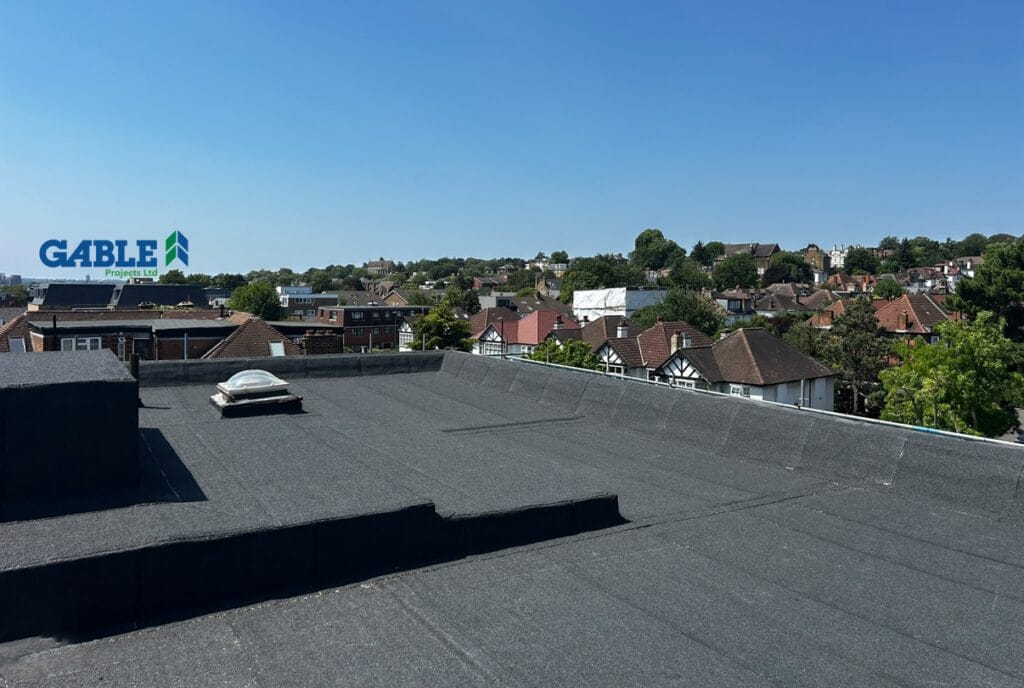
When planning a commercial roofing project, it is easy to focus solely on the roof covering itself. Whether the project involves a complete commercial roof replacement, refurbishment, cladding works or targeted repairs, the reality is that roofing rarely operates in isolation.
A successful roofing project often requires the coordination of numerous trades and specialist contractors. Understanding these requirements from the outset can help avoid delays, control costs and ensure that every element of the building remains safe, compliant and fully operational.
At Gable Projects, our experience across commercial and industrial roofing projects means we understand the importance of looking beyond the roof covering and considering the wider building envelope and associated works.
Scaffolding and Access
Perhaps the most obvious associated trade is scaffolding. Safe access is essential on almost every commercial roofing project, whether through traditional scaffolding, temporary staircases, edge protection, mobile towers or more specialist access systems.
The correct access strategy must consider not only the roofing operatives but also materials, waste removal and other trades requiring roof-level access. On occupied buildings, careful planning may also be needed to maintain safe routes for staff, visitors and members of the public.
Carpentry and Structural Timber Repairs
Carpentry frequently forms part of both pitched and flat roofing projects. Once existing roof coverings are removed, defects can become apparent within timber decking, battens, fascias, joists and other structural components.
Having the capability to identify and coordinate timber repairs and replacement can prevent these discoveries from unnecessarily delaying the roofing programme.
Mechanical and Electrical Services
Commercial roofs frequently accommodate significant amounts of mechanical and electrical (M&E) equipment, including air conditioning units, ventilation systems, ductwork, extract fans, cable trays and other plant.
Roof refurbishment may require these services to be temporarily disconnected, raised, relocated or removed before being reinstated following completion. This can require specialist mechanical and electrical contractors, particularly where maintaining the operation of an occupied building is critical.
Lightning Protection Systems
Existing lightning protection is another important consideration. Conductors and associated equipment can often run across roof areas and may need temporary removal or alteration during roofing works.
Following completion, lightning protection systems may require reinstatement, modification and testing by a suitably competent specialist to ensure the system continues to provide the required protection.
Brickwork and Masonry Repairs
Chimneys, parapet walls, upstands, cavity trays and other masonry elements are regularly encountered during roof refurbishment projects. Deteriorated pointing, damaged brickwork and defective copings can all contribute to water ingress.
Addressing brickwork and masonry repairs alongside the roofing works can provide a much more comprehensive solution than simply replacing the waterproofing around an existing defect.
Asbestos Removal
Older commercial, industrial and educational buildings may contain asbestos-containing materials (ACMs) within roof sheets, insulation, soffits, gutters or other components.
Where asbestos is identified, appropriate surveys, management procedures and, where required, specialist asbestos removal contractors may be incorporated into the project. Identifying these requirements early is vital for safety, compliance, cost planning and programme management.
Solar PV and Renewable Energy
The growth of commercial solar PV installations means photovoltaic panels are becoming an increasingly common consideration during roofing projects.
Existing solar panels may need to be temporarily removed and reinstated to facilitate reroofing. Alternatively, a roof replacement can provide the ideal opportunity to assess whether a new solar
PV installation could be incorporated.
Crucially, the roof condition, expected service life, structural capacity and waterproofing details should all be considered before installing a system expected to remain in place for decades.
Rainwater Goods, Fall Protection and Roof Safety
Roofing projects can also involve replacement or modification of gutters, downpipes and commercial rainwater systems. Increasingly severe rainfall events also make it important to consider whether existing drainage arrangements remain appropriate.
Similarly, existing fall protection systems, mansafe lines, guardrails and roof access equipment may require removal, alteration, reinstatement and certification following roofing works.
Other Specialist Trades
Depending on the building and scope, commercial roofing projects may also require structural steelwork, glazing and rooflight specialists, fire stopping, cladding contractors, pest control, craneage, specialist lifting operations, decorators and internal repair teams.
This is why early investigation and effective project management are so important.
A Coordinated Approach to Commercial Roofing
A commercial roofing project should never be viewed purely as replacing one roof covering with another. The most successful projects consider the entire building envelope, the services located on or through the roof, safe access, drainage and the ongoing operation of the building.
By identifying associated trades at an early stage, clients can reduce unexpected costs, minimise disruption and create a more efficient programme.
At Gable Projects, we work across commercial roofing, cladding and associated building envelope works, coordinating with the other companies within the Gable Group or specialist subcontractors where needed on the requirements needed to deliver complex refurbishment projects safely and efficiently.
If you are planning a commercial roof refurbishment, replacement or building envelope project, early engagement can help identify potential challenges before work begins and ensure that nothing important is overlooked once the roof starts coming off.