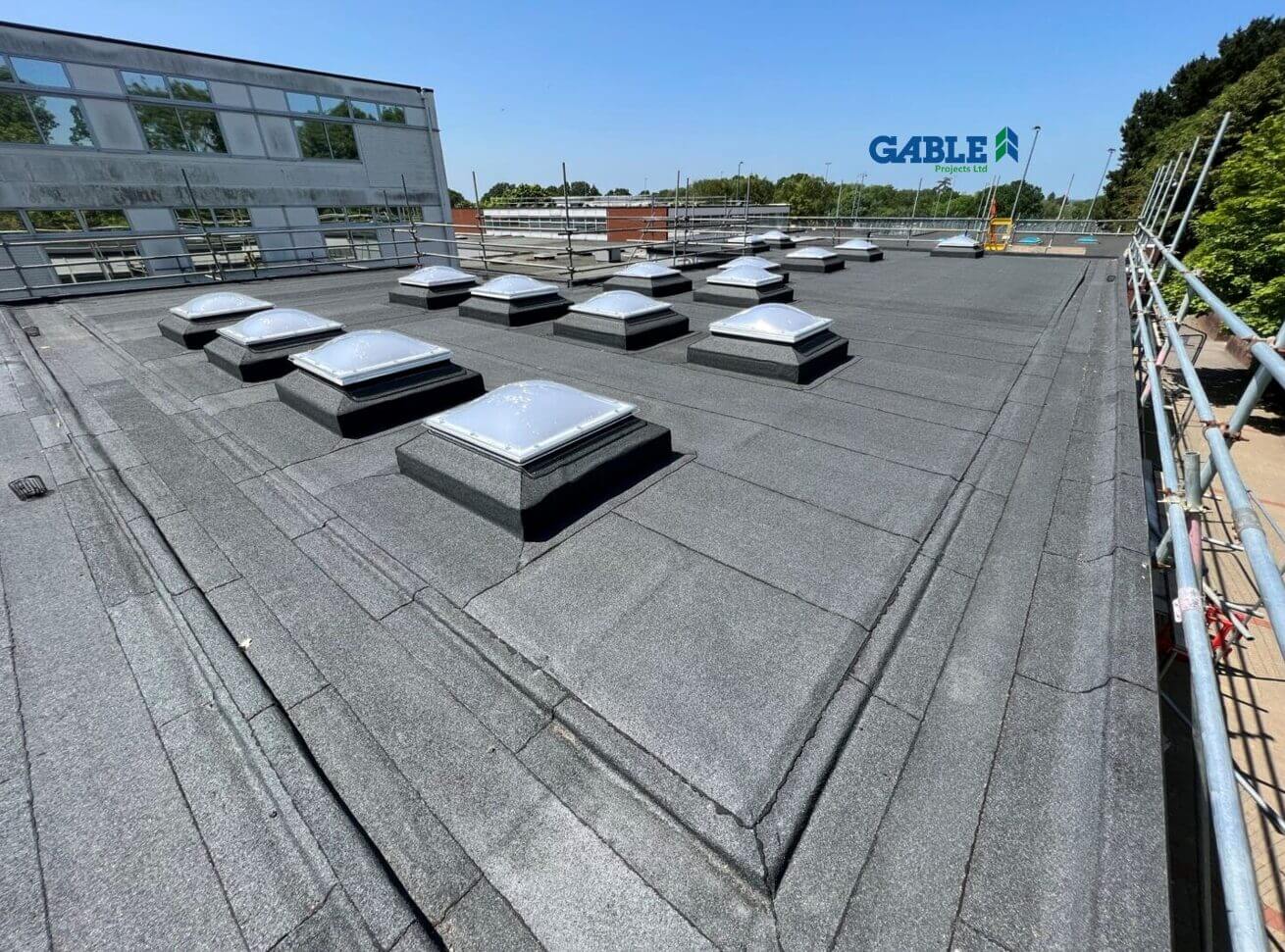
As summer draws to a close and we reluctantly move into the wetter, colder months, September and early autumn provide an ideal opportunity for building owners and facilities managers to assess the condition of their commercial roofs.
A commercial roof condition survey can identify relatively minor defects before they develop into leaks, internal damage and potentially expensive emergency repairs. For commercial and industrial buildings, schools, public-sector properties and other operational sites, preventative roof maintenance can also help minimise disruption and extend the service life of existing roofing systems.
Why Is Autumn a Good Time for a Commercial Roof Inspection?
Commercial roofs are exposed to changing weather conditions throughout the year. UV exposure and higher summer temperatures can affect membranes, coatings, sealants and other roofing components, while autumn introduces falling leaves, increased rainfall and stronger winds.
This makes autumn an excellent time to inspect the roof before winter places additional demands on the building envelope and reactive options become harder to implement.
An inspection can establish the overall condition of the roof while highlighting areas requiring immediate attention and those that should simply be monitored as part of a planned maintenance programme.
What Should a Commercial Roof Survey Look For?
The exact inspection will depend on the roofing system, age and construction of the building. However, there are several common areas that should be considered.
Drainage systems are particularly important. Gutters, outlets, downpipes and drainage channels can quickly become obstructed by leaves, vegetation and debris. Standing water can increase loading on the roof and expose weaknesses in waterproofing systems.
Roof coverings should also be inspected for visible deterioration. On flat roofing systems, this could include splits, blistering, damaged laps or deterioration around penetrations. Metal roofing and cladding systems may require inspection of sheets, fixings, sealants, flashings and interfaces.
Rooflights, penetrations, upstands and perimeter details are other common areas where defects can develop, and water ingress can occur.
Importantly, a roof may appear serviceable from ground level while defects are developing in less visible locations. A structured commercial roof inspection can provide a much clearer understanding of its actual condition.
Prevention Can Be Better Than Emergency Repairs
One of the main benefits of planned roof maintenance is the opportunity to address problems while they remain manageable.
A small defect in a waterproofing membrane, for example, may initially require a relatively straightforward repair. If left through months of heavy rainfall, moisture could penetrate the roofing system and affect insulation, decking and internal finishes.
The resulting work can become considerably more extensive.
There is also the operational impact to consider. An unexpected roof leak over an office, classroom, production facility or sensitive operational area can create disruption that extends far beyond the cost of the roofing repair itself.
Identifying defects early allows remedial works to be planned around building operations rather than carried out reactively following a failure.
Understanding the Condition of Your Roof
A professional roof condition survey should provide more than simply confirmation that a roof is leaking.
Understanding the age, construction, current condition and expected remaining service life of the roofing system can help clients make informed decisions about their property.
Depending on the findings, the appropriate recommendation might be relatively minor maintenance, targeted repairs, refurbishment or eventually complete roof replacement.
Having this information available can also assist with budgeting and longer-term capital expenditure planning.
For organisations responsible for multiple buildings or estates, regular condition surveys can help prioritise expenditure by identifying which roofs require immediate intervention and which remain serviceable.
Don’t Forget the Wider Building Envelope
Roof inspections should not necessarily stop at the roof covering itself.
Commercial buildings frequently incorporate multiple elements that work together to keep the property weathertight, including roofing, cladding, rooflights, flashings, gutters and rainwater systems.
Water ingress can originate from interfaces between these components rather than from the main roof covering.
Taking a wider building-envelope approach can therefore help identify the actual cause of a problem and avoid unnecessary or ineffective repairs.
Plan Now Rather Than React This Winter
No commercial roofing system will last indefinitely, but appropriate inspection and maintenance can help maximise its serviceable life.
With autumn now approaching, this is an ideal time for building owners, facilities managers, estates teams and property professionals to review the condition of their roofs and address potential vulnerabilities before winter weather arrives.
At Gable Projects, we provide commercial roofing and cladding services across a wide range of properties and sectors, supporting clients with roof inspections, maintenance, refurbishment and complete roofing and building-envelope projects.
Taking action now could mean the difference between a planned repair this autumn and an emergency call-out in the middle of winter.