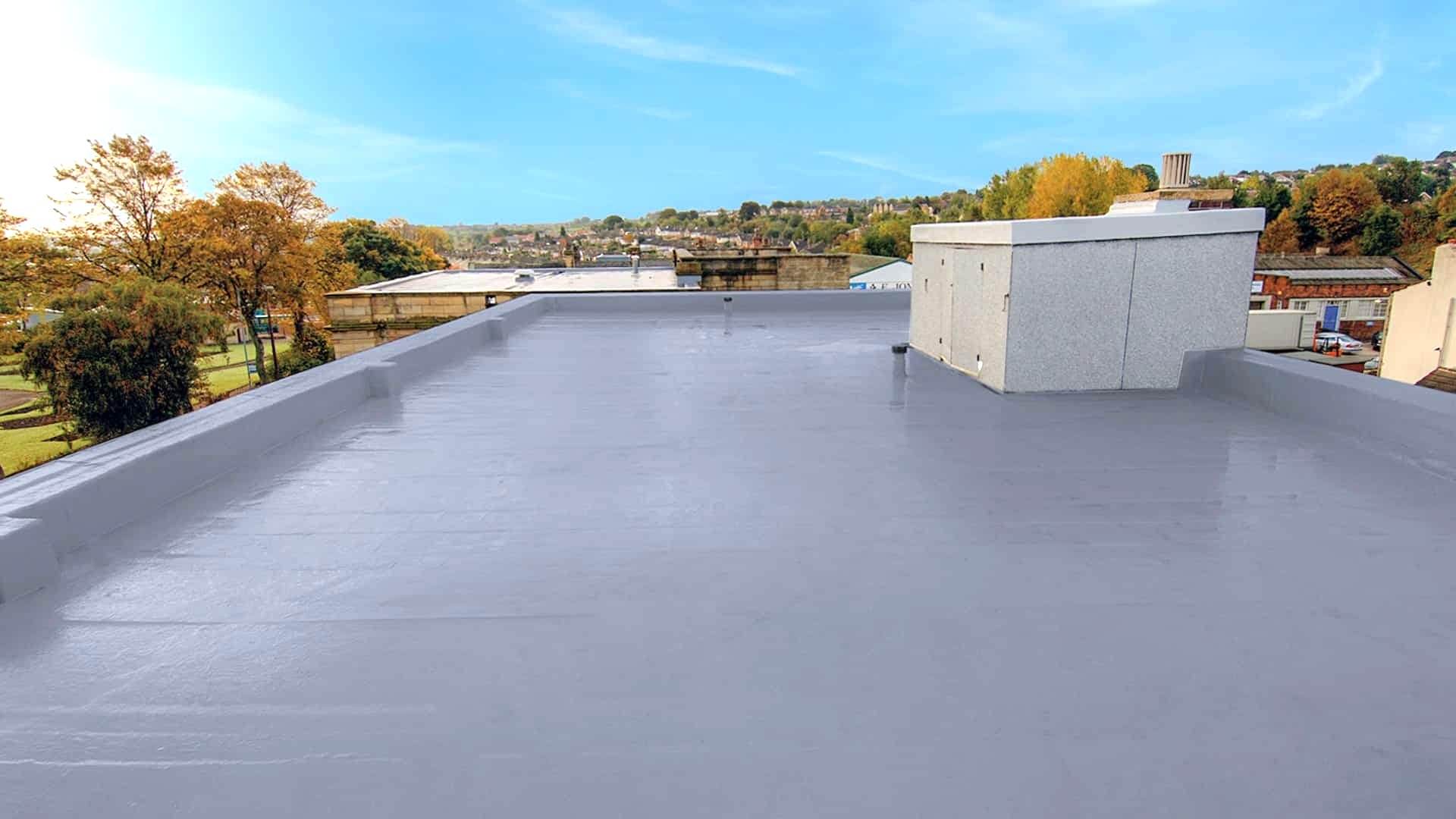
In the world of facilities management, construction, and building maintenance, choosing the right roofing solution is one of the most critical decisions you can make. The roof is your building’s first line of defence, against rain, UV exposure, temperature fluctuations, and time itself. Among the many options available today, liquid roofing systems are increasingly being recognised as a smart and durable alternative to traditional roofing methods.
This article explores why so many architects, contractors, and facilities managers are turning to liquid-applied systems and why they may be the right choice for your next project.
1. Seamless Protection: No Joints, No Leaks
One of the biggest advantages of liquid roofing systems lies in their seamless, joint-free application. Unlike traditional roofing materials such as felt sheets, single-ply membranes, or bituminous rolls, liquid-applied coatings form a continuous waterproof membrane once cured, assuming it is installed correctly!
Because the system is applied as a liquid, it naturally fills small cracks, gaps, and irregularities in the substrate, creating a smooth, fully bonded surface with no weak points where water can penetrate.
In short, no seams means fewer leaks, and that translates to lower maintenance costs and longer roof life.
2.Benefits in Detailing
Liquid waterproofing roofing systems excel in roof detailing, offering seamless protection around complex areas such as parapets, drains, corners, upstands, and roof penetrations.
Unlike traditional membranes and as mentioned above the liquid application flows into every crevice, creating a continuous, fully bonded layer with no joints or weak points. This ensures maximum resistance to leaks and prevents water ingress even in hard-to-reach spots.
Their flexible, elastic properties allow them to accommodate building movement, thermal expansion, and contraction without cracking. For refurbishment or intricate designs, liquid systems provide precision, durability, and reliable waterproofing, making them ideal for both new builds and renovation projects, on it’s own or often alongside other systems.
3. Long-Lasting and Highly Durable
High-performance liquid roofing systems are formulated using advanced polymers such as polyurethane, PMMA (polymethyl methacrylate), or silicone, which offer exceptional elasticity, UV resistance, and weather stability.
These materials can expand and contract with building movement without cracking or delaminating, a key factor in extending the roof’s lifespan. Many premium liquid roofing systems come with manufacturer warranties of 20, 25, or even 30 years, depending on the product and installation conditions.
Their resistance to ponding water, temperature extremes, and UV degradation makes them a reliable long-term investment.
4. Ideal for Refurbishment Projects
Liquid-applied systems are particularly valuable in roof refurbishment and repair scenarios. Instead of removing the existing roof, which can be costly and disruptive, a liquid system can often be applied directly over the existing surface, whether that’s bitumen, asphalt, concrete, or metal.
This cold-applied process eliminates the need for hot works, reducing fire risk and making installation safer and faster. It also minimises downtime and waste disposal costs, which is why liquid roofing is increasingly specified for occupied buildings, such as schools, hospitals, offices, and retail sites.
For many facility managers, the ability to upgrade waterproofing without full roof replacement represents a significant cost and sustainability advantage.
5. Sustainable and Energy-Efficient
Sustainability is now a key priority across construction and property sectors. Liquid roofing systems contribute positively by extending the lifespan of existing roofs, reducing the need for full replacement and waste generation.
Many liquid coatings are low-VOC, solvent-free, and fully recyclable. Additionally, reflective “cool roof” finishes can help lower heat absorption, improving a building’s energy efficiency and reducing cooling costs during summer months.
As part of a broader sustainability strategy, liquid roofing can help organisations meet environmental standards and ESG objectives while maintaining top-tier building performance.
6. Faster Installation, Less Disruption
Traditional roofing methods can require significant downtime, especially when removing old materials, cutting membranes, or using heat-based application. In contrast, liquid roofing systems are cold-applied and quick-curing, which means they can often be installed with minimal disruption to building operations.
Some advanced systems can even cure in damp or cold conditions, extending the roofing season and reducing project delays caused by weather. For live sites such as hospitals, schools or offices, this flexibility is invaluable.
7. Cost-Effective Over the Roof’s Lifetime
While the initial material cost of a high-quality liquid roofing system may be slightly higher than traditional roof membranes and coverings, the long-term savings are significant. Reduced maintenance, extended service life, lower labour costs, and fewer disruptions all contribute to a lower total cost of ownership.
When viewed over a 20- to 30-year period, liquid roofing consistently proves to be one of the most economical solutions available.
Final Thoughts
As the construction industry continues to prioritise durability, sustainability, and efficiency, liquid roofing systems have earned their reputation as a modern, high-performance solution. They combine seamless protection, flexibility, and ease of installation, potentially offering superior value over time.
Whether you’re managing a refurbishment, upgrading waterproofing, or specifying for a new roof, it’s worth considering how a liquid-applied system can deliver long-lasting, energy-efficient protection for your roof and your budget.