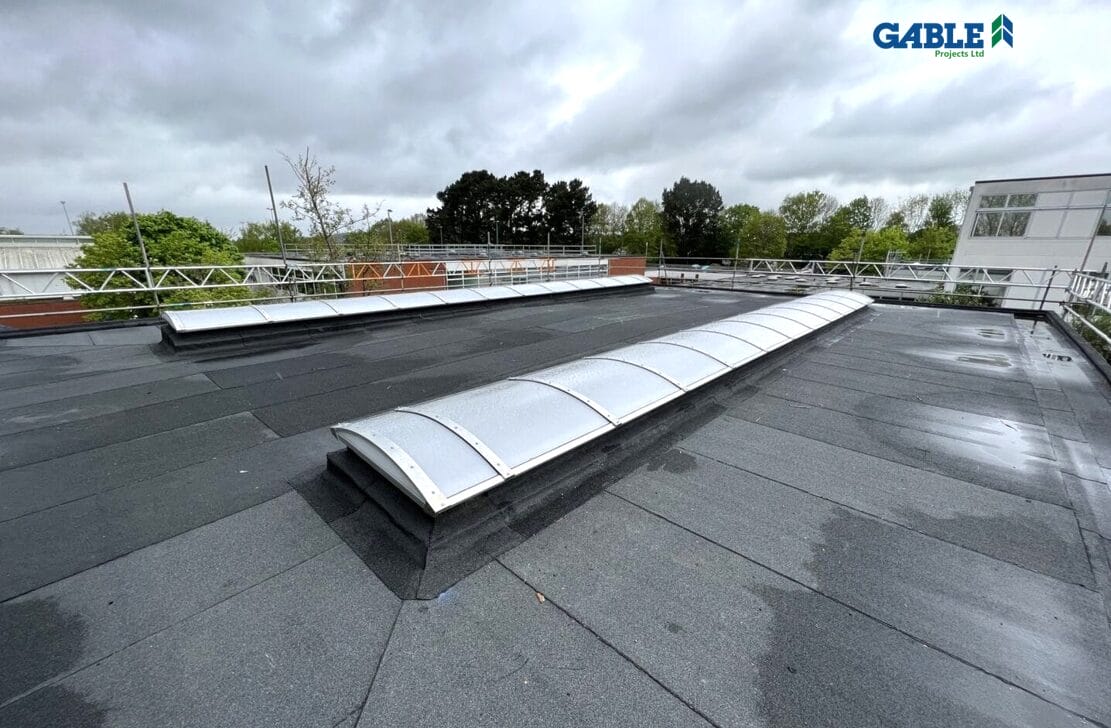
When specifying a flat roofing system for a commercial project, choosing the right waterproofing solution is critical for long-term performance, safety, and value. Two of the most widely used bituminous roofing systems in the commercial sector are torch-on felt roofing and self-adhesive felt roofing systems. Both offer reliable waterproofing, durability, and versatility, but each has distinct advantages depending on the project’s requirements.
Understanding the differences between these systems can help contractors, building owners, and project managers make informed decisions that balance cost, installation efficiency, safety, and long-term performance.
What is a Torch-On Felt Roofing System?
Torch-on roofing is a traditional flat roofing solution that uses a gas torch to heat the underside of modified bitumen membranes. The heat activates the membrane, allowing it to bond securely to the substrate and create a fully waterproof layer.
Torch-on systems are commonly installed as two-layer or three-layer systems and are widely specified for commercial buildings, industrial units, warehouses, schools, and retail developments.
Benefits of Torch-On Roofing
Exceptional Bond Strength
The heat-welded application creates a strong bond between layers, reducing the risk of water ingress and improving overall system integrity.
Proven Long-Term Performance
Torch-on systems have been used successfully across the commercial roofing industry for decades. When installed correctly, they can provide a service life of 20 years or more.
Suitable for Large Roof Areas
For extensive commercial flat roofs, torch-on membranes offer a cost-effective solution that can be installed efficiently by experienced roofing contractors.
Excellent Weather Resistance
Modern modified bitumen membranes provide strong resistance to UV exposure, temperature fluctuations, and harsh weather conditions.
High Durability
Torch-on systems are particularly suitable for roofs that may experience occasional foot traffic for maintenance purposes.
What is a Self-Adhesive Felt Roofing System?
Self-adhesive felt systems use specially engineered membranes with a pressure-sensitive adhesive backing. Instead of requiring heat during installation, the protective film is removed, and the membrane is applied directly to the prepared surface.
These systems have become increasingly popular in commercial roofing projects due to growing health and safety requirements and the demand for safer installation methods.
Benefits of Self-Adhesive Roofing Systems
Improved Site Safety
One of the biggest advantages of self-adhesive roofing is the elimination of naked flames. This significantly reduces fire risk and makes the system ideal for occupied buildings, schools, hospitals, and sensitive commercial environments.
Faster Installation on Certain Projects
Without the need for gas equipment or hot works permits, installation can often be streamlined, particularly on smaller commercial roofs and refurbishment projects.
Reduced Disruption
Self-adhesive systems generate less noise, less odour, and fewer operational disruptions, making them attractive for buildings that remain occupied during roofing works.
Ideal for Restricted Access Areas
Where the use of gas cylinders and torches is difficult or prohibited, self-adhesive systems provide a practical alternative.
Environmental and Compliance Benefits
Many clients and principal contractors now prioritise roofing solutions that reduce site risks and support stricter health and safety standards. Self-adhesive systems align well with these objectives.
Choosing the Right System for a Commercial Flat Roof
The decision between torch-on and self-adhesive roofing should be based on several project-specific factors:
Torch-On Systems May Be Best When:
• Large commercial roof areas are involved
• Maximum bond strength is required
• Budget efficiency is a key consideration
• Experienced roofing operatives are available
• Hot works can be safely managed
Self-Adhesive Systems May Be Best When:
• Fire risk is a major concern
• Occupied buildings require minimal disruption
• Hot works permits are difficult to obtain
• Access restrictions exist
• Health and safety requirements are particularly stringent
The Growing Trend Towards Safer Roofing Solutions
Across the commercial roofing sector, there is an increasing focus on reducing fire risks associated with hot works. While torch-on systems remain a trusted and highly effective solution, many contractors are incorporating self-adhesive membranes into their specifications to meet evolving client expectations and safety standards.
In some cases, hybrid roofing systems combine both technologies, delivering the strength of traditional bituminous roofing alongside the safety advantages of self-adhesive membranes.
Final Thoughts
Both torch-on and self-adhesive felt roofing systems have an important place in modern commercial flat roofing. Torch-on systems continue to offer exceptional durability, proven performance, and cost-effectiveness for large-scale projects. Meanwhile, self-adhesive systems provide enhanced safety, reduced fire risk, and greater flexibility for sensitive or occupied environments.
The most suitable solution will always depend on the building type, project scope, site constraints, and client priorities. By understanding the strengths of each system, roofing professionals can deliver durable, compliant, and high-performing commercial roofing installations that stand the test of time.