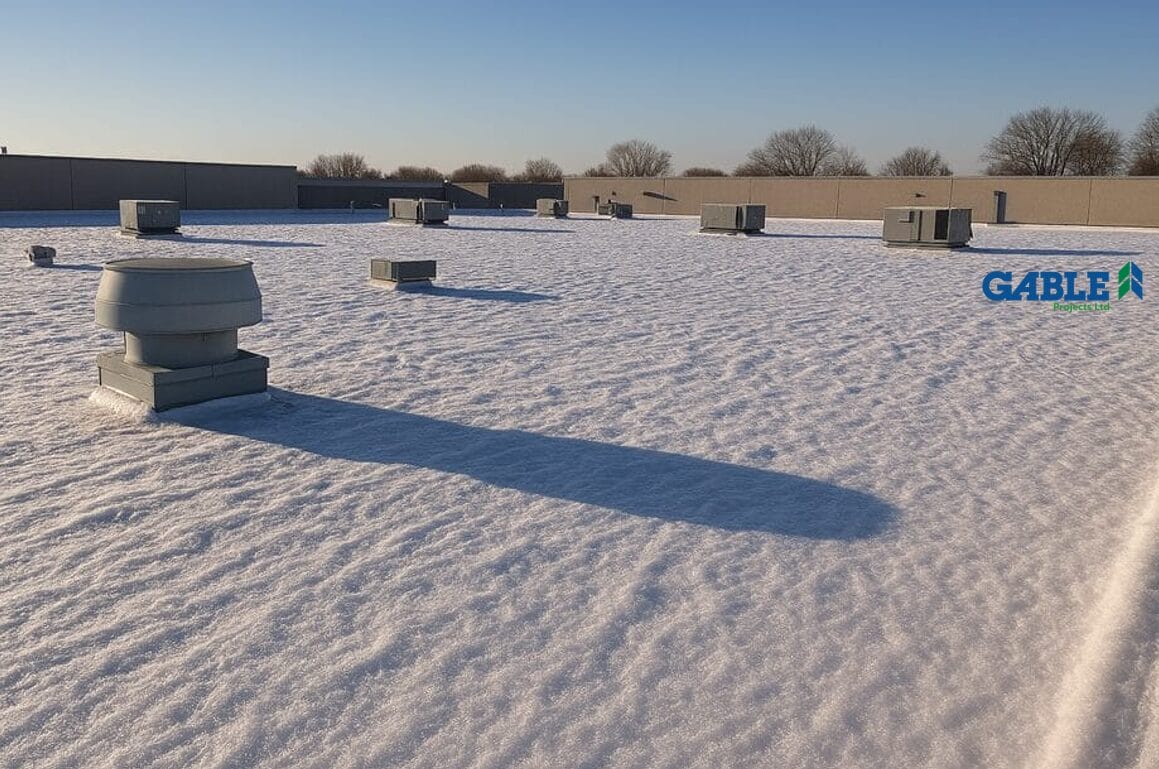
Winter weather brings more than just operational challenges for businesses. Ice and snow can have a serious and lasting impact on your commercial roof if not properly managed. While damage may not always be immediately visible, repeated exposure to freezing conditions can significantly reduce the lifespan of a roofing system and increase long-term repair costs.
Understanding how winter weather affects your commercial roof is essential for protecting your investment and maintaining building performance.
1. Added Weight and Structural Stress
One of the most immediate risks of snow accumulation on a commercial roof is excess weight. Flat and low-slope roofs, common in commercial buildings, are particularly vulnerable. Wet snow can weigh significantly more than dry snow, placing stress on roof decks, joists, and load-bearing components.
Over time, repeated stress can lead to:
• Structural fatigue
• Roof deck deflection
• Cracking of membranes and seams
Even if collapse does not occur, ongoing stress can weaken the roof system and shorten its overall lifecycle.
2. Freeze-Thaw Cycles and Material Deterioration
Ice and snow create constant freeze-thaw cycles, which are especially damaging to commercial roofing materials. During the day, melting snow allows water to penetrate small cracks, seams, or flashing. When temperatures drop overnight, this water freezes and expands.
This expansion can:
• Widen existing cracks
• Separate seams
• Damage flashing and roof penetrations
Over time, these small failures compromise the roof’s waterproofing ability, leading to leaks, insulation damage, and accelerated material breakdown.
3. Ice Dams and Poor Drainage
Blocked drains and gutters are a major winter roofing issue. Ice build-up can prevent proper water drainage, causing standing water that refreezes repeatedly. This creates ice dams, which force water underneath the roofing membrane.
For commercial roofs, prolonged ponding water and ice can:
• Break down membranes prematurely
• Saturate insulation, reducing energy efficiency
• Increase the risk of interior water damage
Poor drainage during winter is one of the most common contributors to reduced roof lifespan.
4. Hidden Damage That Goes Unnoticed
One of the most dangerous aspects of ice and snow damage is that it often remains out of sight until significant harm has occurred. Snow cover can hide membrane splits, punctures, or displaced components. When spring arrives, building owners may suddenly experience leaks with no obvious cause.
By this stage, damage may already include:
• Mould growth within insulation
• Corrosion of metal components
• Compromised structural integrity
This type of hidden deterioration can drastically reduce the long-term performance of a commercial roof.
5. Long-Term Impact on Roof Lifecycle
A well-maintained commercial roof can last decades. However, repeated winter damage can cut years off its expected service life. Minor issues caused by ice and snow often develop into major failures if left unaddressed.
The long-term effects include:
• Increased maintenance and repair costs
• Premature roof replacement
• Reduced building energy efficiency
• Greater risk of operational disruptions
Proactive winter roof management plays a critical role in preserving the full lifecycle of your roofing system.
6. Preventative Maintenance Is Key
The best way to protect your commercial roof from ice and snow damage is preventative maintenance. This includes:
• Regular roof inspections before and after winter
• Clearing snow responsibly to prevent overload
• Ensuring drains and gutters remain clear
• Addressing minor defects before freeze-thaw cycles worsen them
Working with a professional commercial roofing contractor ensures issues are identified early and corrected properly.
Final Thoughts
Ice and snow are unavoidable in many climates, but the damage they cause to commercial roofs doesn’t have to be. By understanding the risks and investing in proactive maintenance, building owners and facilities managers can protect their roofs, extend their lifespan, and avoid costly surprises.
A commercial roof is a long-term asset. Safeguarding it through the winter months is one of the smartest investments you can make in your building’s future.