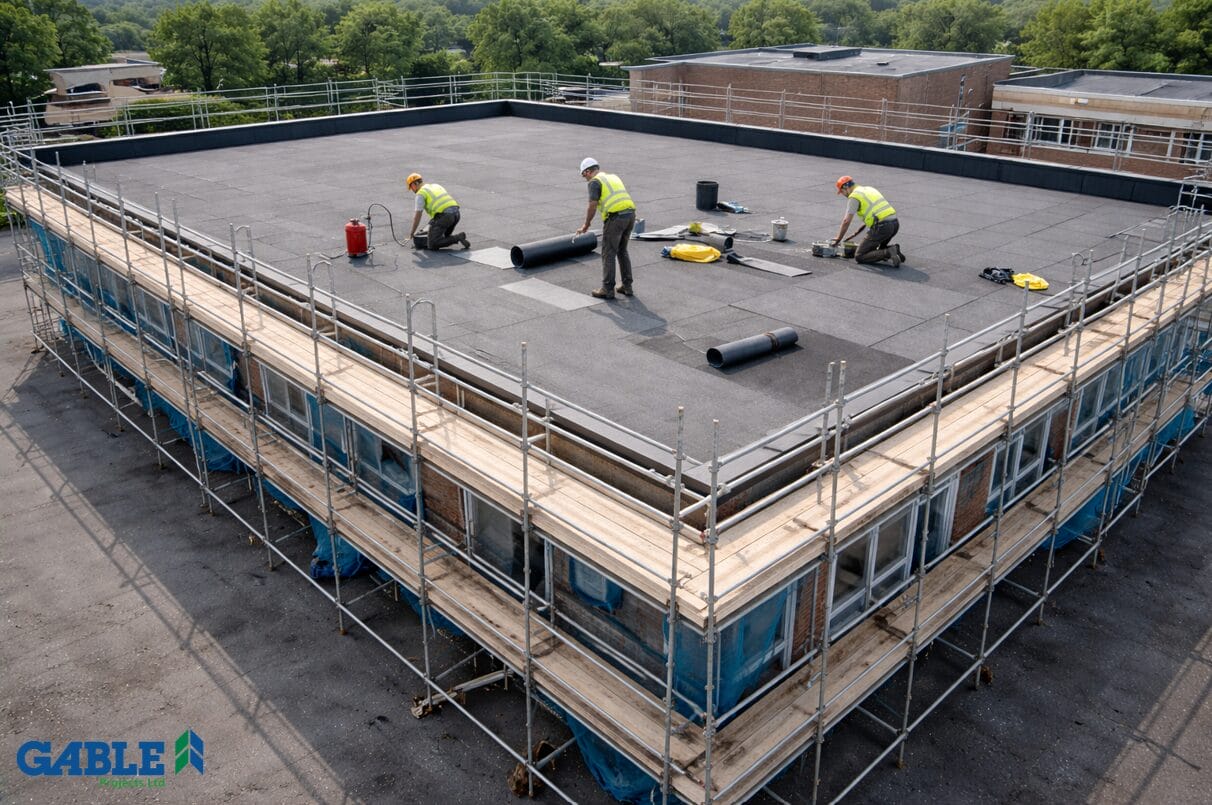
Commercial roof replacements are high-risk construction activities that demand strict adherence to UK health and safety legislation. From working at height to managing hazardous materials, duty holders must ensure robust planning, competent supervision, and full legal compliance. Failure to meet these requirements can lead to serious injuries, project delays, heavy fines, and reputational damage.
This article outlines the key health and safety requirements in the UK for commercial roof replacement projects, covering RAMS, CDM regulations, asbestos management, and the Building Safety Act.
Risk Assessments, Method Statements (RAMS) and Planning
Effective health and safety management begins with thorough Risk Assessments and Method Statements (RAMS). These documents identify site-specific hazards such as falls from height, falling objects, weather exposure, and manual handling risks.
Method statements should clearly define:
• Safe systems of work
• Access and egress arrangements
• Emergency and rescue procedures
• Roles and responsibilities
RAMS must be communicated to all workers before work begins and reviewed regularly, especially if site conditions or scope change. Proper planning is a legal requirement under the Management of Health and Safety at Work Regulations 1999.
CDM Regulations 2015 (Construction Design and Management)
Most commercial roof replacements fall under the CDM Regulations 2015, which aim to improve health and safety throughout the project lifecycle.
Key duty holders include:
• Client – ensures adequate time, resources, and competent contractors
• Principal Designer – manages health and safety risks during the design phase
• Principal Contractor – plans, manages, and monitors construction work
Where applicable, projects must be notified to the HSE (F10), and a Construction Phase Plan must be in place before work starts on site.
Working at Height Regulations
Working at height remains one of the leading causes of fatal injuries in construction. The Work at Height Regulations 2005 require employers to avoid work at height where possible and, where unavoidable, to minimise risks.
For commercial roofing projects, this typically involves:
• Scaffolding with edge protection
• Guardrails and toe boards
• Mobile elevating work platforms (MEWPs)
• Fall restraint or fall arrest systems
All equipment must be inspected regularly, and operatives must be trained and competent.
Material Handling and Lifting Operations
Roof replacements often involve heavy materials such as insulation boards, metal sheets, and membrane systems. Poor material handling can lead to musculoskeletal injuries and dropped-object incidents.
Under the Manual Handling Operations Regulations 1992 and LOLER 1998, contractors must:
• Assess lifting risks
• Use mechanical lifting equipment where practicable
• Ensure cranes, hoists, and lifting accessories are certified and inspected
Clear exclusion zones should be established below roof areas to protect people at ground level.
Asbestos and Hazardous Materials
Many older commercial buildings contain asbestos-containing materials (ACMs), particularly in roof sheets, insulation, and coatings. Before any roof replacement work begins, an Asbestos Refurbishment and Demolition Survey is legally required under the Control of Asbestos Regulations 2012.
If asbestos is identified:
• Work must be planned and controlled
• Licensed asbestos contractors may be required
• Appropriate PPE and air monitoring must be used
Other hazardous substances, such as bitumen fumes and solvents, must be managed under COSHH regulations.
The Building Safety Act and Fire Safety Considerations
The Building Safety Act 2022 has introduced stricter requirements, particularly for higher-risk buildings. Commercial roof replacements must now consider:
• Fire performance of roofing systems
• Compliance with Approved Document B
• Clear documentation of materials used
Duty holders must ensure that any changes do not compromise the building’s fire safety strategy.
Training, Competence, and Ongoing Monitoring
All workers involved in commercial roof replacements must be adequately trained, supervised, and competent. This includes:
• CSCS certification
• Working at height training
• Asbestos awareness
Regular site inspections, toolbox talks, and audits help maintain compliance and promote a strong safety culture.
Public and Occupant Safety
In a commercial setting, it is likely that the building will remain operational during the roof replacement. Measures must be taken to protect occupants and the public, including:
• Clear signage and restricted zones
• Dust suppression and noise control
• Temporary closures or working outside of operating hours
Conclusion
Health and safety compliance is critical for successful commercial roof replacements in the UK. By following RAMS, adhering to CDM Regulations, managing working at height risks, and addressing asbestos and building safety requirements, contractors can protect workers, clients, and the public while ensuring legal compliance and project efficiency.