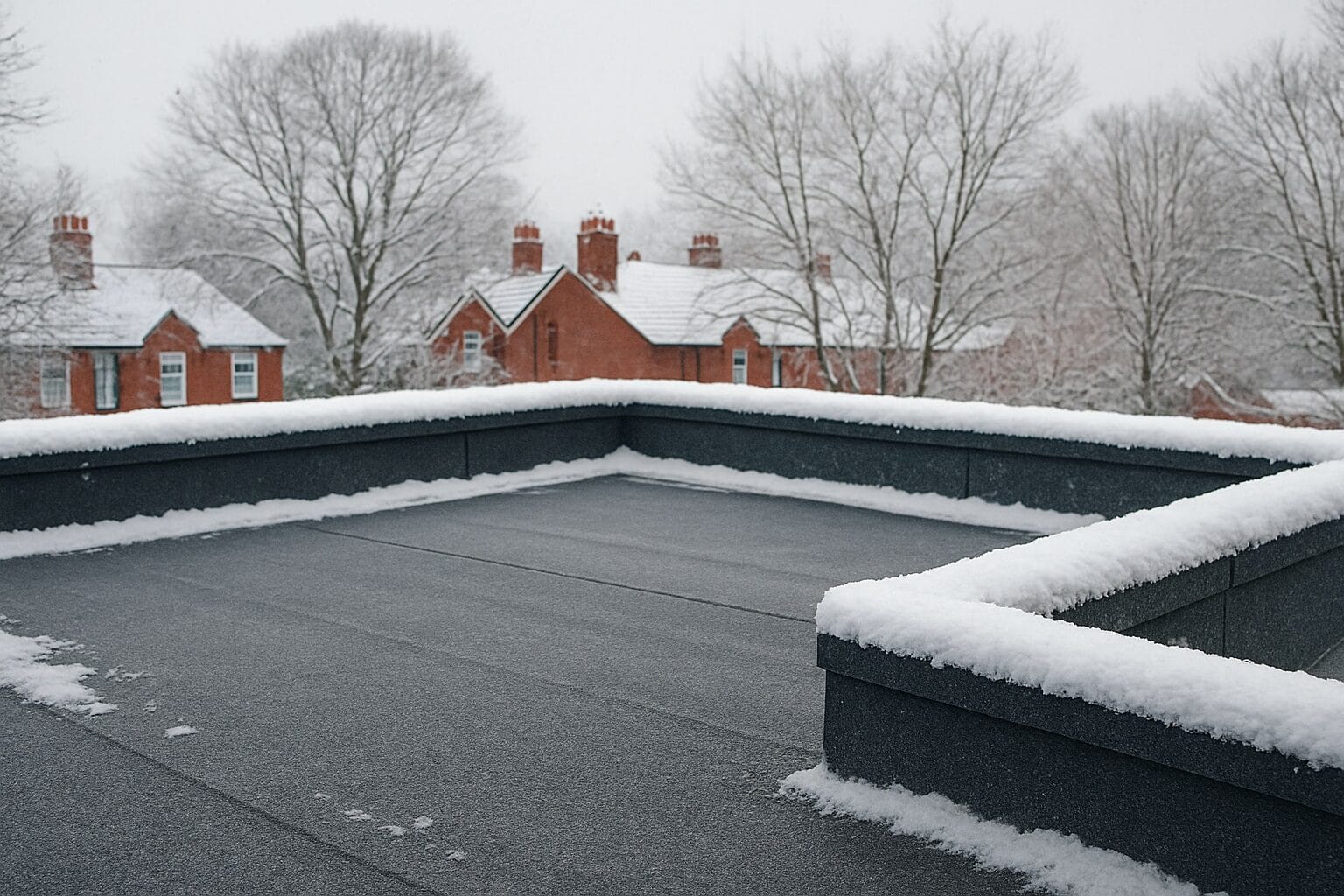
For many business managers and businesses, winter can be the season when roofing problems become most urgent, but paradoxically, it’s also when roofing services are harder to access. Shorter daylight hours, cold temperatures, ice, and snow all reduce the number of safe working days available. On top of that, roofing teams are often juggling an influx of emergency callouts caused by storm damage or leaks, meaning availability can be limited.
Other factors, such as travel difficulties in snow or icy conditions, restricted access to sites due to safety concerns, and delays in material delivery, further complicate scheduling. This combination of weather, safety, and operational constraints means that reactive maintenance requests often take longer to be addressed, making pre-emptive planning and proactive inspections more critical than ever. Understanding these challenges is the first step toward keeping roofs in good condition and avoiding costly emergency repairs during the winter months.
Challenge faced by commercial roofing contractors
1. Bad Weather Reduces Safe Working Windows
Shorter daylight hours, rain, frost, and snow make it harder to schedule work safely. This results in:
• Delays on existing jobs
• Reduced productivity
• Increased health and safety risks
2. Surge in Emergency Callouts
Cold weather exposes existing weaknesses in roofs:
• Freeze-thaw cycles cause cracks
• Snow and debris put strain on roof structures
• Blocked gutters lead to water ingress
This leads to more urgent, unplanned jobs, overwhelming teams that are already stretched.
3. Difficulty in Prioritising Work
With multiple emergency requests coming in at once, companies often struggle to:
• Triage effectively
• Communicate realistic timelines
• Allocate resources efficiently
This can impact customer satisfaction and team morale.
4. Material and Supply Chain Delays
In winter months, suppliers often face their own logistical challenges. Roofing firms must deal with:
• Longer lead times
• Stock shortages
• Higher material costs
This can slow down even minor repairs.
How Roofing Companies Can Manage Winter Reactive Maintenance More Effectively
1. Strengthen Your Winter Preparedness Plan
A proactive plan ensures your team isn’t caught off-guard when temperatures drop. This can include:
• Pre-winter roof inspections for existing clients
• Scheduled preventative maintenance programmes
• Emergency response protocols
Early intervention reduces the need for emergency repairs later.
2. Invest in Digital Job Management Tools
Modern roofing companies increasingly rely on digital platforms to stay organised during peak maintenance periods. These tools can:
• Automate job scheduling
• Improve team communication
• Provide real-time status updates for clients
• Store photos and job reports instantly
This streamlines operations and ensures faster response times, critical during winter.
3. Train Your Teams for Cold-Weather Safety
Safety should remain at the forefront of winter operations. Practical steps include:
• Additional training in working at heights in winter
• Clear policies around weather-related stoppages
• Proper PPE for cold and wet conditions
A trained team works more confidently and efficiently in challenging environments.
4. Use a Prioritisation Framework for Emergency Calls
Not all emergencies are equal. Creating a clear framework for triaging jobs helps your team respond logically and consistently. For example:
• Category A: Active leaks threatening internal assets
• Category B: Damage to key roof components but no active ingress
• Category C: Non-urgent minor repairs
This prevents resources being drained by low-priority issues.
5. Offer Winter Maintenance Packages to Existing Clients
One of the most effective ways of reducing reactive work is to turn it into proactive work. Offering clients packages such as:
• Gutter clearing
• Roof condition checks
• Thermal imaging surveys
• Drainage and debris clearing
…can significantly reduce emergency callouts and generate predictable winter revenue.
6. Strengthen Supplier Relationships Early
By planning ahead and communicating proactively with suppliers, contractors can:
• Secure winter stock
• Lock in better pricing
• Access hard-to-find materials
• Reduce downtime caused by shortages
Strong supplier partnerships make a huge difference during peak months.
The Hidden Impact of Winter on Roofs and Why Issues Often Go Unnoticed
Winter is one of the harshest seasons for any roofing system, and many of the problems that arise during colder months are the result of issues that have been building quietly over time. The combination of freezing temperatures, heavy rainfall, snow, and strong winds places a significant strain on roof coverings, flashings, gutters, and structural components. One of the most damaging processes is the freeze–thaw cycle: when trapped water freezes, it expands and forces small cracks to widen, eventually leading to leaks that may not appear until days or even weeks later. Similarly, snow accumulation or standing water can overload roofs, especially those with aging materials or poor drainage.
The challenge is that many winter-related roofing problems are not immediately visible. Minor cracks, loose tiles, deteriorated sealants, blocked gutters, and failing insulation can exist beneath the surface, gradually worsening as temperatures fluctuate. To the untrained eye, a roof may appear intact while hidden moisture begins damaging internal structures. Without a thorough, professional inspection, these subtle warning signs are often missed, only becoming apparent when they have already caused costly internal damage. This is why winter maintenance isn’t just about responding to emergencies; it’s about proactively identifying the issues that winter can easily conceal.
Conclusion: Winter Doesn’t Have to Be a Crisis Season
Winter is always going to be a demanding period for roofing companies, but with modern tools, strategic planning, and a proactive mindset, contractors can manage reactive maintenance far more effectively. By preparing early and optimising operations, roofing businesses can turn seasonal pressure into an opportunity to deliver exceptional service and stand out in a competitive market.
If you’re looking to strengthen your winter maintenance strategy, now is the time to plan before the next storm hits.