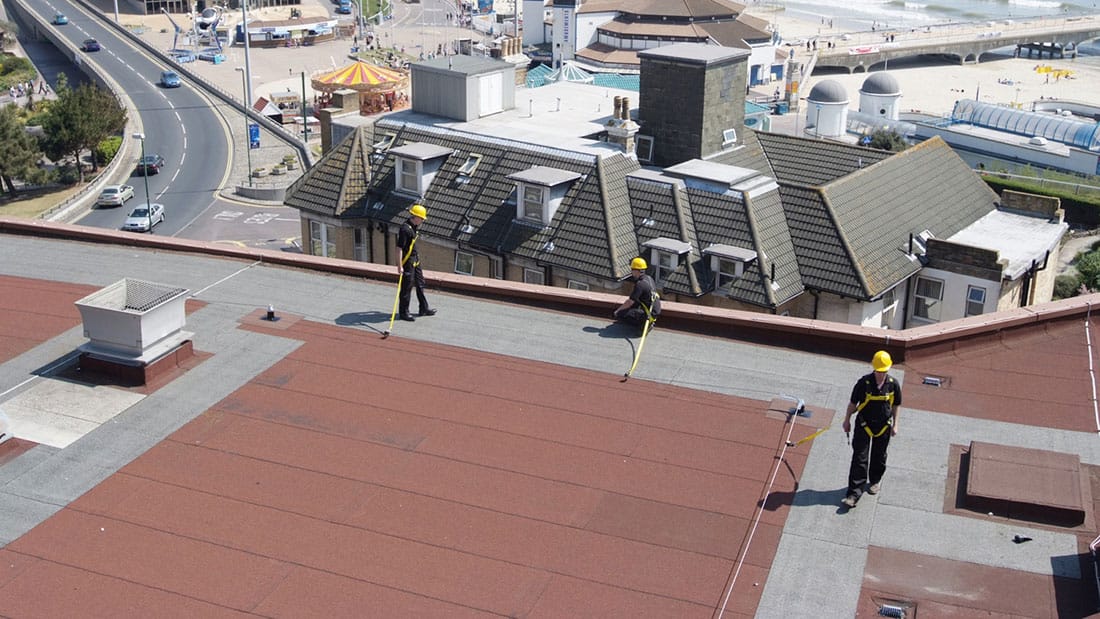
In the commercial roofing industry, working at height is unavoidable. Whether repairing a roof system, installing a new membrane, or conducting routine inspections, operatives and contractors face daily exposure to one of the construction sector’s most dangerous hazards: falls from height. According to industry statistics and reporting from the HSE, falls continue to be the leading cause of serious injury and fatalities in roofing and construction. Despite improved awareness, the risks persist, often due to poor planning, inadequate equipment, and non-compliance with the Construction (Design and Management) Regulations (CDM).
This article explores why falling from height remains the biggest threat in commercial roofing and outlines the essential measures, such as robust scaffolding, edge protection, and properly developed RAMS (Risk Assessments and Method Statements), can prevent life-changing injuries and deaths.
Why Falls from Height Remain the No.1 Hazard in Commercial Roofing
1. High-Risk Work Environments
Commercial roofs are often elevated, exposed, and structurally complex. Slippery surfaces, fragile materials, and extreme weather conditions can quickly turn a safe space into a dangerous one.
2. Fragile Roofing Materials
Skylights, aged asbestos sheets, corroded metal decking, and other fragile surfaces present concealed dangers. Without proper identification and protection, operatives are at high risk of falling through the surface.
3. Poor or Inadequate Edge Protection
Not all commercial buildings have permanent parapets or guardrails. Temporary edge protection is sometimes absent, incomplete, or incorrectly installed.
4. Inconsistent Training and Competence
Contractors often have varying levels of experience and safety awareness. Insufficient knowledge of working-at-height regulations and equipment use increases risk.
5. Time Pressure and Fatigue
Tight deadlines, long shifts, and challenging work conditions contribute to lapses in concentration, a leading cause of preventable accidents.
Key Measures to Prevent Falls from Height in Commercial Roofing
1. Robust Scaffolding and Access Solutions
Scaffolding remains one of the most effective forms of collective fall protection. Properly designed and installed scaffolding provides:
• Safe access and egress
• Stable working platforms
• Integrated guardrails and toe boards
• Secure ladder systems
When scaffold use isn’t appropriate, alternative safe access methods include MEWPs (Mobile Elevating Work Platforms), roof ladders, or temporary stairs.
Under CDM, scaffolding must be erected and inspected by competent persons following recognised standards.
2. Comprehensive RAMS (Risk Assessments and Method Statements) Under CDM
The CDM Regulations place legal duties on clients, principal contractors, and designers to plan and manage safety throughout the entire project. A vital part of this is the creation of RAMS, which must:
• Identify hazards such as fragile surfaces, unprotected edges, weather risks, and access points
• Provide a step-by-step method of how the work will be carried out safely
• Specify the correct fall-prevention and fall-arrest systems
• Outline emergency and rescue procedures
• Assign responsibilities to competent individuals
Well-written RAMS ensure that every operative understands the risks, the controls in place, and the behaviour expected on site.
3. Edge Protection and Fall Prevention Systems
When working on flat or low-pitch commercial roofs, proper edge protection is essential. This includes:
• Permanent or temporary guardrails
• Parapet extensions
• Toe boards
• Mobile man-safe systems
• Safety netting
Collective protection should always be prioritised over personal protective equipment (PPE).
4. Personal Fall-Arrest Systems
When collective systems are not possible, operatives must be protected using:
• Full-body harnesses
• Shock-absorbing lanyards
• Horizontal or vertical lifelines
• Fixed and certified anchor points
All equipment must be inspected before each use and periodically by a competent person.
5. Clear Rescue and Emergency Plans
A fall-arrest system is only effective if a rescue plan is in place. Under CDM, employers must demonstrate how they will:
• Retrieve a fallen worker quickly
• Use onsite rescue equipment
• Communicate and coordinate emergency procedures
Delays in rescue can lead to suspension trauma or fatality.
6. Weather Monitoring and Work Restrictions
Wind, rain, ice, and extreme heat all increase the risk of slips, trips, and loss of balance. Work should pause if weather conditions compromise safety.
7. Competency-Based Training
All contractors and subcontractors must receive training in:
• Working at height
• Harness use and inspection
• Correct use of scaffolding and MEWPs
• Identifying fragile surfaces
• Following RAMS
• CDM compliance
Regular refresher training reinforces best practices.
Conclusion: Preventing Falls from Height Is Possible with Proper Planning and CDM Compliance
While falling from height remains the biggest threat to operatives in commercial roofing, it is also one of the most preventable. By investing in robust scaffolding, implementing thorough RAMS under CDM, ensuring proper training, and enforcing collective protection measures, companies can significantly reduce the risk of injury and death.
A strong safety culture not only protects workers, it enhances reputation, reduces downtime, and ensures full compliance with legal obligations.