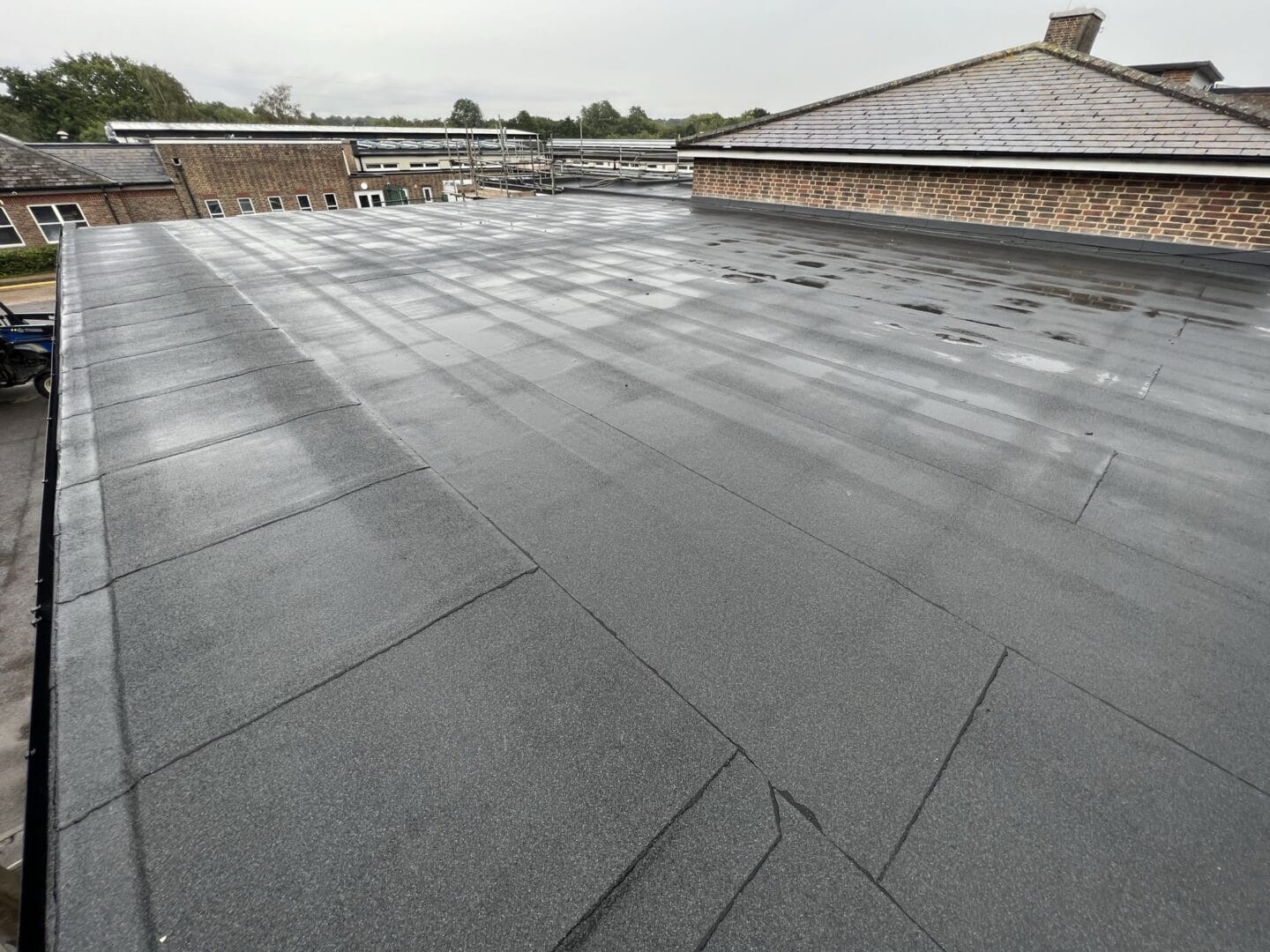
Felt flat roof systems are a popular and cost-effective solution for large commercial buildings. Designed to provide a durable, weather-resistant, and thermally efficient covering, these systems consist of multiple carefully installed layers, each serving a specific purpose. The key to a high-performance felt roof lies not only in the quality of materials used but also in the integrity of the layering system.
1. Decking/Base Structure
At the very base of a felt flat roof is the roof deck, usually made from concrete, metal, or marine-grade plywood. This structural element forms the foundation on which all other layers are applied.
Purpose:
• Provides the structural support for the entire roofing system.
• Needs to be strong enough to bear foot traffic and loads such as snow or HVAC equipment.
• Must be dry, clean, and level to ensure proper adhesion of subsequent layers.
2. Vapour Control Layer (VCL)
Directly above the deck sits the vapour control layer, a sheet material (often a bituminous membrane or polyethylene) that plays a vital role in protecting the insulation and waterproofing layers from internal moisture.
Purpose:
• Prevents warm, moist air from the building’s interior from penetrating upward into the insulation layer.
• Reduces the risk of condensation, which can cause rot, mould, and degradation of insulation performance.
• Extends the lifespan of the roof system.
3. Insulation Layer
Thermal insulation boards, typically made of PIR (polyisocyanurate) or EPS (expanded polystyrene), are installed over the VCL. These boards can be mechanically fixed or bonded depending on the roofing design. Certain specifications will call for tapered schemes, which is designed to create a slope or fall on a flat roof, enabling efficient water drainage and preventing water ponding.
Purpose:
• Reduces heat loss through the roof and improves energy efficiency.
• Helps buildings comply with building regulations concerning thermal performance (U-values).
• Provides a level and consistent surface for the felt system to be applied on top.
4. Underlay Felt (Base Layer)
This is the first of the bituminous felt layers that make up the waterproofing system. Typically, this is a torch-on or self-adhesive felt that is rolled out and bonded to the insulation or a separating layer.
Purpose:
• Acts as a preparatory waterproof layer.
• Provides initial protection from moisture during the installation process.
• Enhances the overall flexibility and stability of the roofing system.
5. Intermediate Layer (Optional)
Some high-spec felt systems incorporate a middle or intermediate felt layer, which is sandwiched between the underlay and cap sheet. This may be used for additional strength or redundancy.
Purpose:
• Increases the roof’s resistance to mechanical damage.
• Provides extra waterproofing security, especially in high-risk areas.
• Enhances thermal and sound insulation in some applications.
6. Cap Sheet (Top Layer)
The cap sheet is the final, outermost felt layer. Typically made from high-performance bitumen with a mineral finish, this layer is torch-applied, self-adhesive, or cold-applied depending on the system.
Purpose:
• Provides the primary weatherproofing barrier, protecting the building from rain, UV rays, and temperature extremes.
• The mineral surface offers resistance to mechanical wear, foot traffic, and fire.
• Often available in a variety of colours to suit aesthetic preferences or reflectivity requirements.
7. Edge Detailing and Flashings
In addition to the core layers, perimeter detailing such as edge trims, drip details, upstands, and lead flashings are vital parts of the overall system.
Purpose:
• Ensures a watertight seal at all junctions, penetrations, and terminations.
• Prevents water ingress where the flat roof meets walls, skylights, or HVAC units.
• Maintains thermal continuity and prevents cold bridging at edges.
Conclusion
There are lots of options when is come to replacing your roof and these have been discussed previously here – Guide to Replacing Commercial Roofing. A properly installed flat roof system on a large commercial building is more than just a waterproof cover. It’s a multi-layered assembly, each part performing a crucial function, from structural support and moisture control to thermal insulation and environmental protection. Understanding the purpose of each layer helps in planning, installation, maintenance, and long-term performance of the roofing system. With quality materials and professional installation, a felt roof can deliver reliable service for 20 years and beyond.