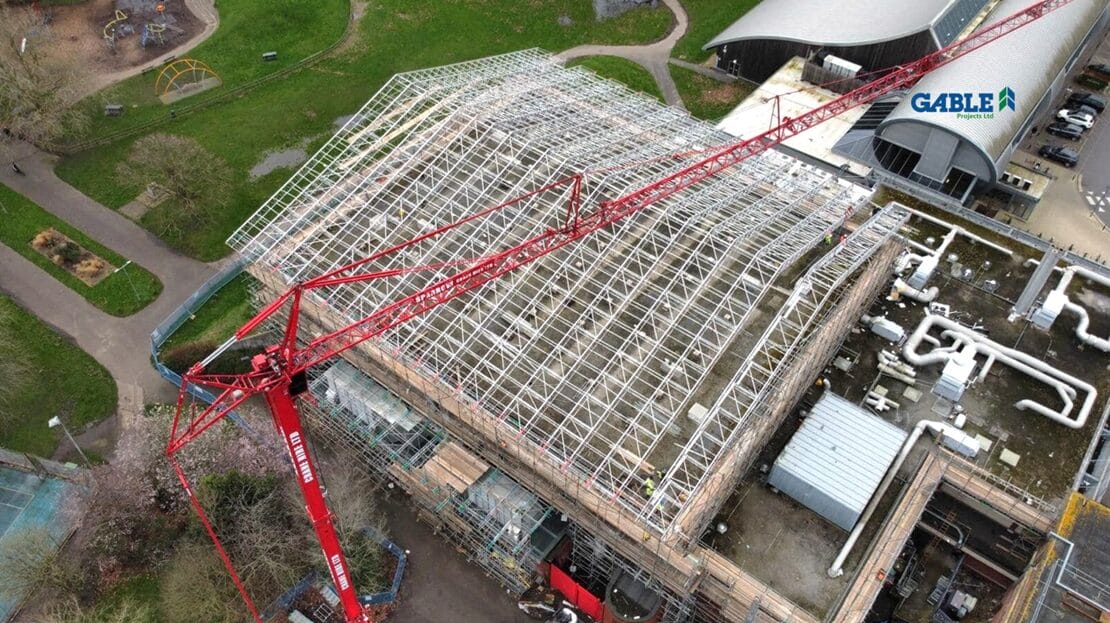
In the world of commercial roofing, project delays, weather exposure, and operational disruption can quickly escalate costs. Whether you’re managing a large-scale refurbishment, industrial re-roofing project, or structural repair, one solution consistently proves its value: the temporary roof system.
Far from being an optional extra, temporary roofing is becoming a strategic necessity in modern construction and commercial roof replacement projects.
What Is a Temporary Roof System?
A temporary roof is a fully engineered, weatherproof covering installed above a building while permanent roofing works are carried out. Unlike simple tarpaulin coverings, modern temporary roof systems are robust aluminium structures with shrink-wrap or sheeted coverings, designed to withstand harsh weather conditions.
They create a fully enclosed working environment, protecting both the structure and the workforce.
1. Weather Protection and Risk Reduction
Weather is one of the biggest risk factors in commercial roofing projects. Rain ingress, wind damage, and unexpected storms can cause:
• Interior water damage
• Delays to programme schedules
• Increased labour costs
• Insurance complications
By installing a temporary roof structure, contractors eliminate weather-related uncertainty. Work continues regardless of external conditions, ensuring deadlines are met and costly disruptions avoided.
For facilities such as hospitals, schools, warehouses, and manufacturing plants, this protection is critical. Business continuity often depends on maintaining a dry, controlled internal environment.
2. Improved Health & Safety Compliance
Health and safety is paramount in commercial construction. A temporary roof system provides:
• Enhanced fall protection
• Reduced slip hazards
• Controlled working conditions
• Protection from high winds
By enclosing the workspace, contractors create a safer and more predictable environment for roofing teams. This not only protects workers but also demonstrates compliance with health and safety regulations—an important consideration for project managers and stakeholders.
3. Programme Certainty and Cost Control
Time overruns are expensive. Every delayed day can impact project budgets, tenant agreements, and operational output.
A temporary roofing solution allows work to proceed uninterrupted. This reliability improves project scheduling accuracy and reduces the risk of penalty clauses or extended preliminaries.
While some decision-makers initially view temporary roofs as an additional expense, they often prove to be a cost-saving investment. When compared to the financial risk of water damage, extended hire of access equipment, or labour downtime, the return on investment becomes clear.
4. Protection of Assets and Sensitive Equipment
Many commercial buildings house valuable assets, such as machinery, stock, IT infrastructure, or specialist equipment. Exposure to moisture during roof replacement can result in severe financial loss.
Temporary roof installations protect:
• Warehouse stock
• Manufacturing equipment
• Data centres
• Educational facilities
• Retail environments
For sectors such as pharmaceuticals or food production, environmental control is not optional—it is essential for regulatory compliance.
5. Enhanced Professional Reputation
Clients value contractors who plan proactively and mitigate risk. Recommending a temporary roof system demonstrates foresight, professionalism, and a commitment to delivering high-quality outcomes.
In competitive commercial roofing tenders, outlining the inclusion of a temporary roof structure can strengthen your proposal by showing how you will safeguard the building and maintain programme certainty.
6. Sustainability and Material Protection
Sustainability is increasingly important in commercial construction. Water-damaged insulation and materials often need to be discarded, creating unnecessary waste.
By keeping the structure dry throughout the project, temporary roofing helps:
• Reduce material waste
• Improve build quality
• Protect insulation performance
• Support sustainable construction goals
Final Thoughts
In today’s construction environment, risk management is everything. A temporary roof system for commercial roofing projects is no longer a luxury, it is a strategic solution that protects assets, improves safety, ensures programme certainty, and safeguards your reputation.
When planning your next commercial roofing project, consider not just the cost of installation, but the cost of uncertainty. A temporary roof doesn’t just protect the building, it protects the entire project.