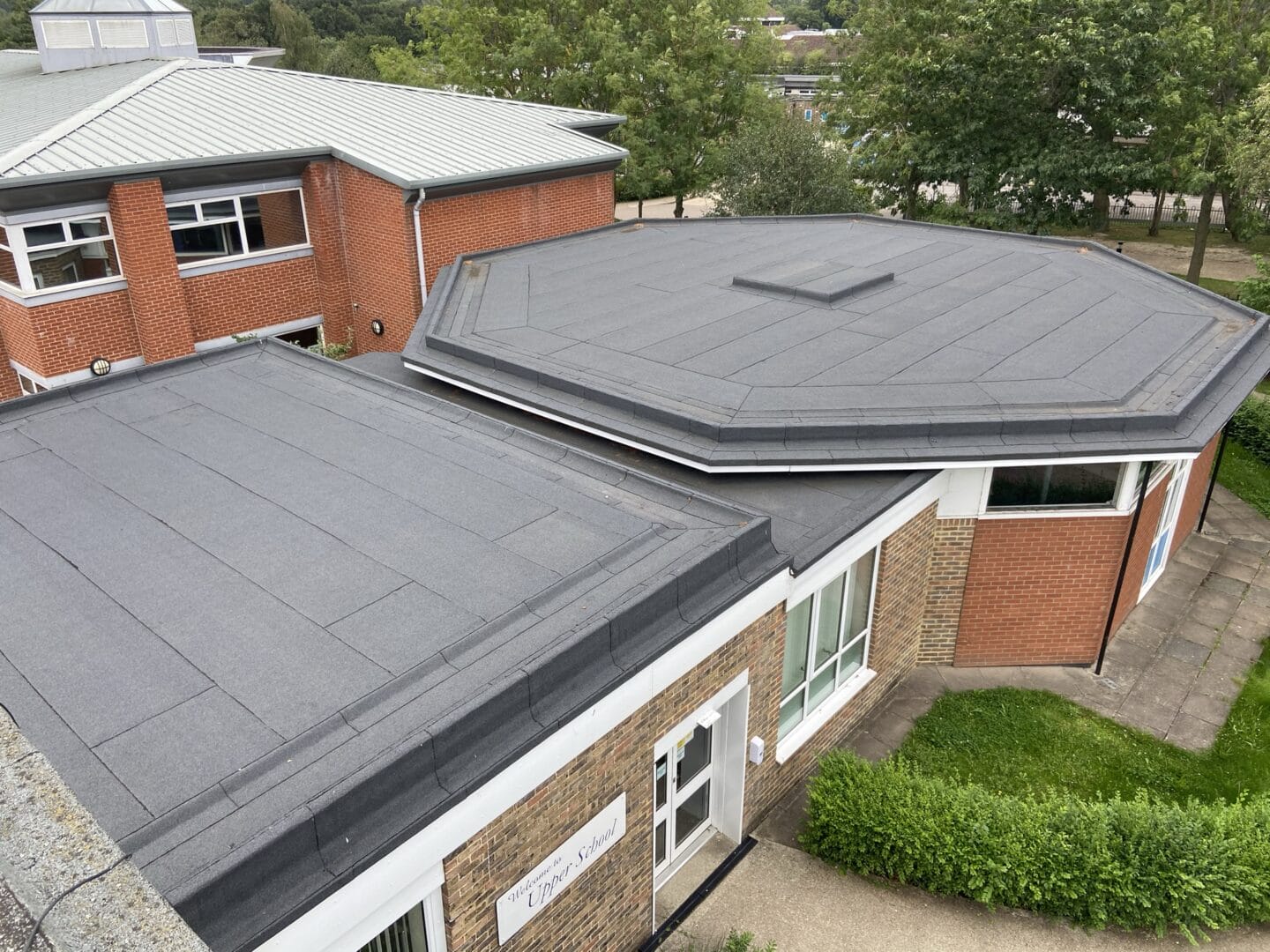
Flat roofs are a common feature on many commercial buildings in the UK, particularly schools, due to their cost-effectiveness and the efficient use of space they offer. However, despite best intentions and even with regular maintenance and upkeep, these roofs age, building managers are often faced with a crucial decision: whether to overlay the existing roof or to strip it back and install a completely new system. Both options have their merits and drawbacks, particularly in the context of public sector budgets, safety standards, and long-term performance expectations, the latter linked closely with the resultant energy efficiency of the buildings.
Overlaying a Flat Roof: The Pros
1. Cost-Effective
One of the main advantages of overlaying is the cost saving. Removing and disposing of the existing roof covering can be expensive due to labour costs and waste management charges. Overlaying avoids much of this, making it an attractive option for budget-conscious organisations like schools.
2. Quicker Installation
Overlaying a roof is typically faster than a full strip-and-replace project. This reduced project time means less disruption to the school’s daily operations, which is especially important during term time. As often the case, scheduling the work during holidays can further minimise impact.
3. Less Disruption and Mess
Stripping a roof can create dust, noise, and other disruptions that may affect occupants and neighbouring properties. Overlaying is generally a cleaner and quieter process, making it more suitable when the building remains in use.
4. Improved Insulation Opportunities
An overlay project often presents the chance to upgrade thermal performance by adding insulation above the existing surface, helping schools meet energy efficiency standards (such as Part L of the Building Regulations).
5. Minimal Risk of Water Ingress
By not removing the original waterproofing layer, the existing building envelope remains intact during the works, reducing the risk of water ingress during unpredictable UK weather.
Overlaying a Flat Roof: The Cons
1. Limited Lifespan
Overlaying a failing roof system can be a short-term solution if the existing substrate is severely compromised. If underlying damage is not identified and addressed, the new system may fail prematurely.
2. Weight Restrictions
Adding a new layer increases the load on the existing structure. Before overlaying, a structural survey is essential to ensure the building can safely bear the additional weight.
3. Potential to Mask Problems
Overlaying can conceal issues such as trapped moisture, rot, or degraded insulation. Without a detailed condition survey and core sampling, these hidden problems may worsen over time and compromise the new roof.
4. Reduced Future Options
By adding more layers, future roofing work becomes more complex. UK building regulations generally only permit two roof coverings before complete removal is mandated.
Stripping and Relaying a Flat Roof: The Pros
1. Long-Term Solution
Stripping the old roof allows for a completely fresh installation, which can significantly extend the life of the roof and provide a higher-quality finish.
2. Full Inspection and Repair
Removing the existing roof enables thorough inspection of the deck and supporting structure. Any issues such as wet insulation, timber rot, or corrosion can be properly addressed.
3. Improved Compliance and Warranty
New roof systems installed from scratch often come with more comprehensive warranties and are more easily designed to meet the latest UK regulations and standards. More information on this can be found here – Commercial Roof Warranties – What you need to know!
4. Customisation
A complete new roof allows for bespoke design improvements, including enhanced drainage systems, better vapour control layers, and the integration of solar panels or green roofing solutions.
Stripping and Relaying: The Cons
1. Higher Cost
Full replacement is significantly more expensive due to labour, disposal, and materials. For publicly funded projects, these costs can be a barrier.
2. Longer Project Duration
Stripping and replacing a roof takes more time, increasing the risk of weather-related delays and disruption to school operations.
3. Temporary Exposure
Stripping leaves the roof deck exposed to the elements. Careful planning and temporary protection measures are essential to avoid water ingress.
Conclusion
For commercial buildings and especially schools, the choice between overlaying and stripping a flat roof depends on a careful assessment of the building’s condition, budget, and long-term goals. Overlaying offers a cost-effective, less disruptive option for roofs that are structurally sound, while a full replacement is a better investment for buildings needing comprehensive repairs or major upgrades. A thorough survey and professional consultation are key to making the right decision.