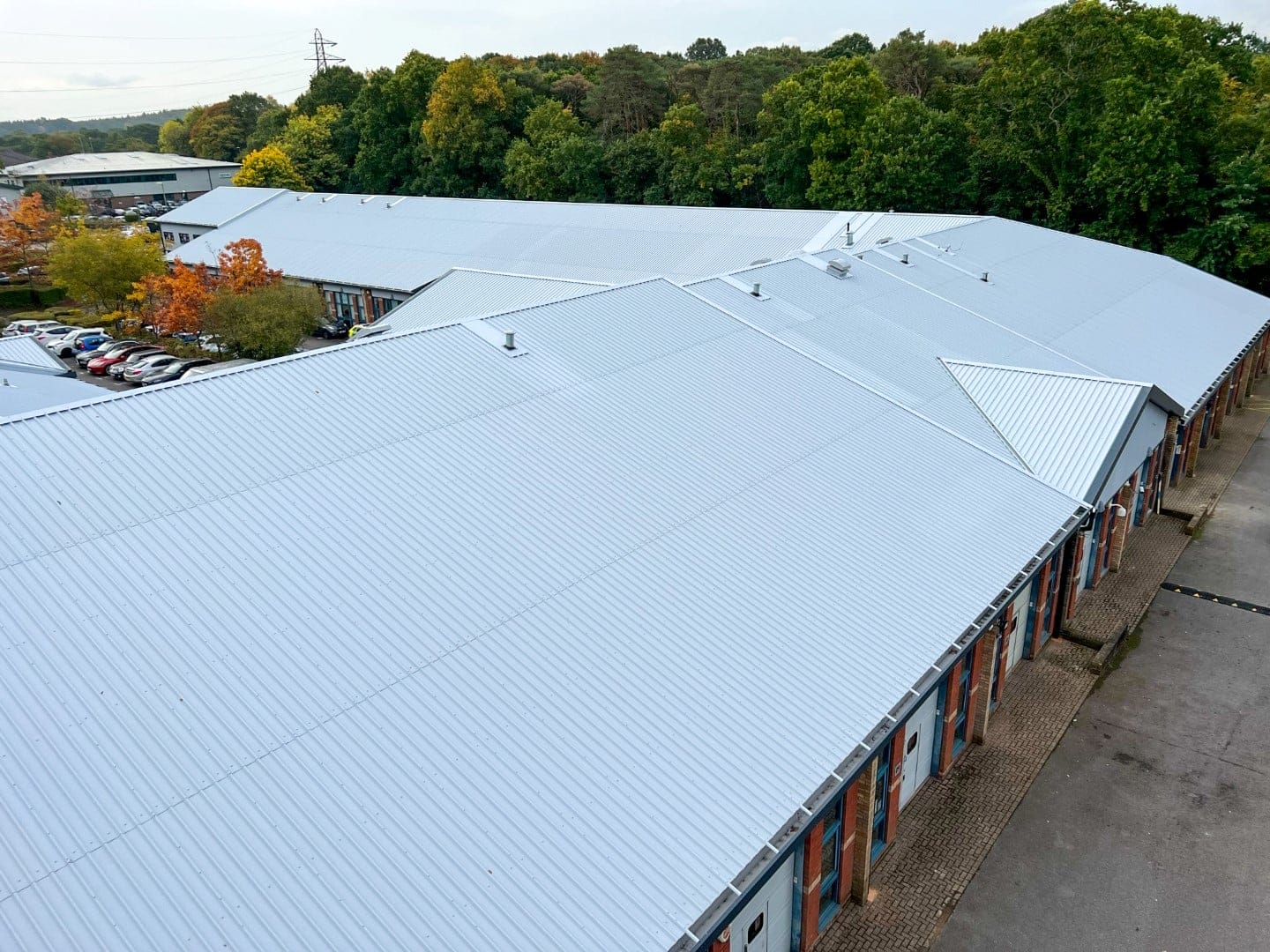
The main differences between standard residential and commercial roofing replacements in the UK. A roof replacement is not just a roof replacement – in fact no two are ever the same. When undertaking roof replacements or refurbishments, the appointed contractor considerations will include design complexity, materials, project scope, regulations, and access logistics.
Here is a more detailed look at the intricacies and concerns taken into account before embarking on any commercial roof replacement project.
Key Differences: Residential vs. Commercial Roofing
Feature |
Residential Roofing |
Commercial Roofing |
| Roof Type | Mostly pitched | Mostly flat or low-slope |
| Common Materials | Slate, clay/concrete tiles, felt | Felt, EPDM, liquid, GRP, metal sheet |
| Scale & Size | Smaller footprint | Larger surface area + taller buildings |
| Installation Time | Faster | Longer due to scale and complexity |
| Purpose/Function | Aesthetic + weather protection | Structural load-bearing + HVAC |
| Insulation Needs | Standard (Part L building regs) | Often more advanced/complex |
Contractor Considerations
1. Access & Safety
• Residential: Ladder access is often sufficient. Scaffolding is common but less extensive, given the size of the roof area.
• Commercial: May require cranes, hoists, and specialised safety equipment for working at height or over large flat areas. When business continues to operate beneath the roof, the installation of crash decks and other safety features are a common occurrence.
2. Permits & Building Regulations
• Commercial projects often require more detailed planning permissions, fire ratings, and compliance with Part B (Fire Safety), Part L (Conservation of fuel and power), and Part M (Access to and use of buildings).
3. Labour and Equipment
• Commercial projects may require larger teams, often multiple different teams’ dependant on the specialities being used, a variety of machinery (e.g. heat welders for membrane roofs), and subcontractors for other aspects such as rainwater goods and HVAC/plant.
• Residential work is often more manageable with a smaller, single crew.
4. Disruption Management
• Residential work typically involves homeowners and requires noise/dust control, tidy workspaces, and respect for domestic schedules.
• Commercial jobs must minimise downtime for businesses, requiring phased installations or out-of-hours work. Often business cannot cease regardless of the issues experienced e.g. schools, hospitals and train stations.
5. Warranty & Insurance
• Commercial clients often expect extended warranties (10–30 years) and higher insurance cover, depending on the roofing system/spec used. This will often steer the specification towards a certain product or design system.
• Contractors must also provide risk assessments and method statements (RAMS) for commercial jobs. Commercial buildings are often a lot taller than residential property, certainly when comparing a house with an office block, for example – this comes with it’s own considerations.
6. Budgeting and Cost Management
• Residential jobs are more fixed-cost and price-sensitive.
• Commercial projects can be more flexible but may involve tendering processes, detailed invoicing, and progress payments. Once work have started there will often be additional works or variations to the original submission.
Conclusion
In summary, while both residential and commercial roofing serve the essential purpose of protecting buildings from the elements, the differences in design, materials, scale, and regulatory requirements make each type of project uniquely complex. Residential roofing is typically smaller in scope, with pitched designs and aesthetic considerations at the forefront. Commercial roofing, on the other hand, often involves flat roofs, specialised materials, and additional infrastructure such as HVAC system, requiring a more strategic and technically focused approach.
For contractors, understanding these differences is vital not just for project planning and execution but also for compliance, safety, and customer satisfaction. Whether you’re replacing a slate roof on a suburban home or installing a membrane system on an industrial unit, tailoring your methods and team to the specific demands of the job is key to delivering successful, long-lasting results.