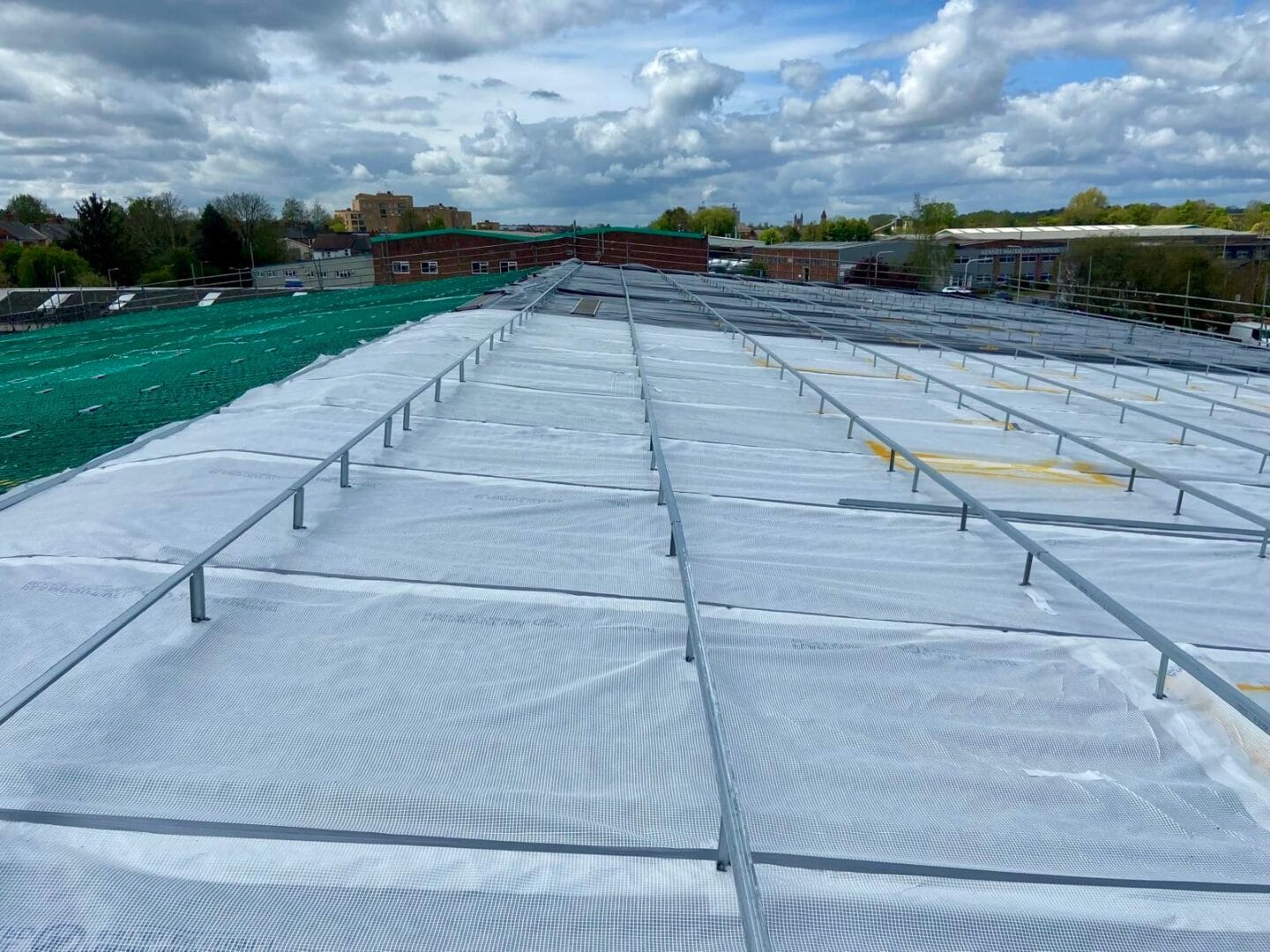
In commercial property management and construction, roof performance is one of the biggest drivers of energy efficiency and one of the most overlooked. With rising energy costs and increasing regulatory pressure, understanding how a commercial roof contributes to insulation has become essential for building owners, facilities managers, and developers.
A key part of that discussion is the U-value, a metric that tells you exactly how well your roof retains heat and how much energy your building may be wasting.
What Is a U-Value and Why Does It Matter for Commercial Buildings?
A U-value measures the rate at which heat passes through a building element such as a wall, floor, or roof. It is expressed in W/m²K (watts per square metre per degree Kelvin).
• Lower U-value = better insulation = lower energy losses
• Higher U-value = poor insulation = higher heating and cooling costs
Commercial roofs are one of the largest continuous surfaces of a building. If poorly insulated, heat will escape rapidly in winter and buildings will overheat in summer, pushing HVAC systems harder and increasing operational costs.
Improved U-values can:
✔ Reduce annual energy expenditure
✔ Improve thermal comfort for occupants
✔ Support ESG, decarbonisation, and compliance goals
✔ Increase asset value and marketability
✔ Extend the lifespan of the waterproofing system
How Roof Construction Influences the U-Value
The U-value of a commercial roof depends on several factors:
1. Insulation Thickness and Type
Rigid foam boards, mineral wool, PIR, and phenolic insulation all provide different levels of thermal performance.
2. Roof Build-Up
The layers within the roof – vapour control, membranes, insulation boards, and deck type, together influence thermal resistance.
3. Roof Design (Warm Roof vs Cold Roof)
• Warm roofs keep insulation above the structural deck, reducing condensation risk.
• Cold roofs place insulation below the deck, often resulting in thermal bridging and poorer U-values.
4. Condition of the Existing Roof
Water ingress, saturated insulation, or aged membranes drastically reduce performance.
Two Key Approaches to Improving Roof Insulation
When upgrading a commercial roof, property owners typically consider two main approaches:
Option 1: Stripping the Existing Roof and Installing New Insulation
A full strip-off and replacement is the most comprehensive method. The existing waterproofing and insulation are removed, leaving the deck exposed for a fresh build-up.
Advantages
• New insulation can be installed to current standards (e.g., meeting target U-values).
• Opportunity to replace aged or defective materials.
• Improved airtightness and moisture control.
• Ability to redesign the roof as a warm roof for optimal performance.
• Longer warranties from manufacturers due to full refurbishment.
Best For
• Roofs with saturated or damaged insulation
• Roofs near or past their service life
• Projects requiring compliance with current building regulations
• When structural changes are also planned
Considerations
• Higher upfront cost
• More intrusive process
• Requires temporary weather protection
Option 2: Retrofitting Insulation Over an Existing Roof
A retrofit (overlay) insulation system adds new insulation and a new waterproofing layer on top of the existing roof without removing the old one.
Advantages
• Faster and less disruptive installation
• More cost-effective than stripping the roof
• Reduces waste sent to landfill
• Can still significantly improve the U-value
• Ideal for operational buildings where downtime must be avoided
Best For
• Roofs in otherwise good structural condition
• Buildings requiring a thermal upgrade with minimal disruption
• Projects with limited budgets
Considerations
• Not suitable if existing insulation is saturated
• Roof height and upstand details must be checked
• May not achieve the same long-term performance as a full replacement
Which Approach Delivers the Best U-Value Improvement?
Both solutions can achieve strong U-value performance, but:
• Full replacement delivers the most predictable and optimised results.
• Retrofit insulation offers excellent improvement with less cost and downtime.
The right choice depends on:
• Current roof condition
• Moisture levels in the existing build-up
• Regulatory requirements
• Budget and operational constraints
• Long-term strategic plans for the building
A professional roof survey, including thermographic imaging, core sampling, and U-value calculations will help determine the most effective solution.
Final Thoughts
The roof of a commercial building is not just a weatherproof layer, it is one of the most influential components in the energy performance of the entire structure. Whether through a full strip and rebuild or a modern retrofit insulation solution, upgrading the thermal efficiency of your roof can deliver substantial savings, improve occupant comfort, and support sustainability objectives.
By understanding U-values and choosing the right upgrade pathway, building owners can future-proof their assets while reducing operational costs year after year.