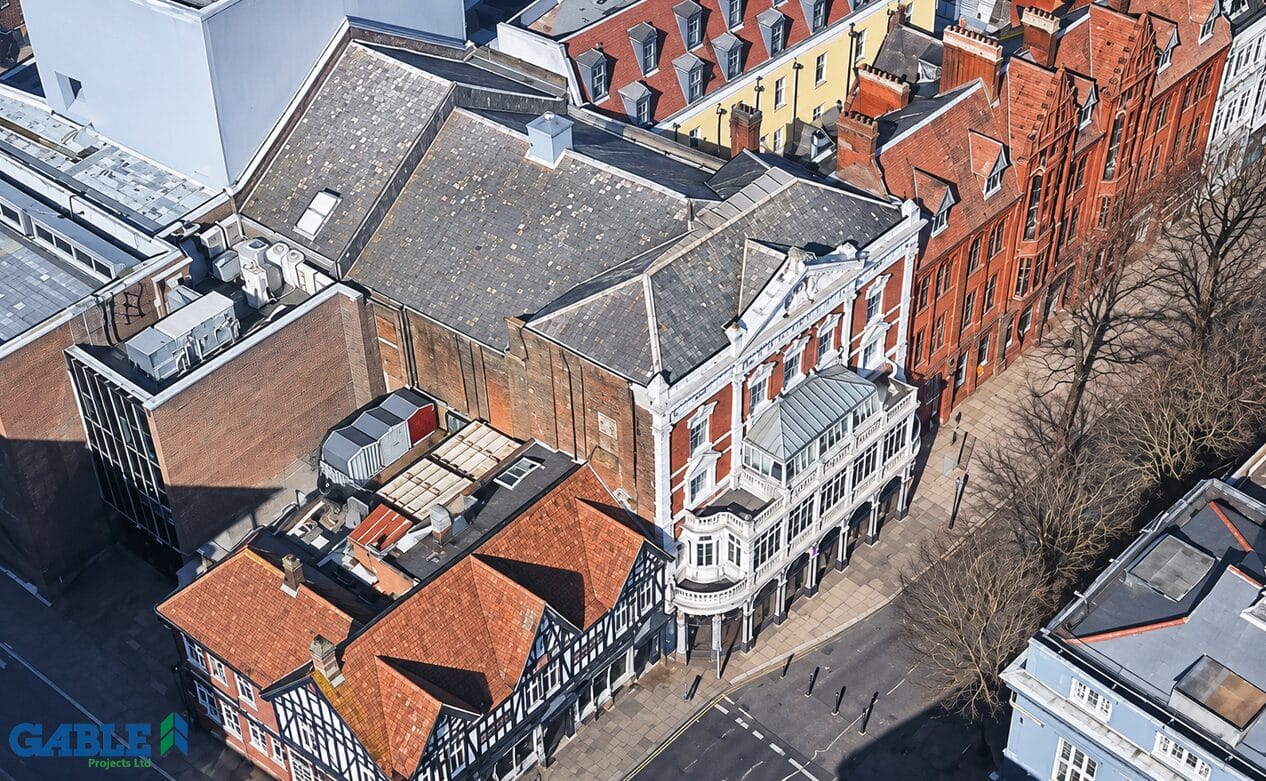
Replacing a pitched roof is rarely straightforward, but when that roof forms part of a historic or heritage building, the challenges extend far beyond simply removing and replacing slates or tiles.
While conventional pitched roof replacements and heritage roofing projects share many fundamental principles, the additional responsibilities associated with preserving historic buildings demand a different level of planning, technical understanding and craftsmanship.
For commercial roofing contractors, recognising these differences is essential to delivering a successful project that balances performance, longevity and architectural preservation.
Standard Pitched Roof Replacement: A Familiar Process
For many commercial, educational and residential buildings, replacing an existing slate or tiled roof follows a relatively established process.
Following an initial roof condition survey, works will typically include stripping existing coverings, assessing the underlying structure, replacing defective battens and underlay, and installing new slates or tiles alongside associated flashings, ridges and rainwater goods.
Modern roofing systems can offer improvements in weather resistance, ventilation, thermal performance and overall service life.
Although access, structural integrity, weather protection and compliance remain important considerations, there is often greater flexibility when selecting replacement materials and installation methods. Heritage buildings, however, introduce an entirely different set of considerations.
Heritage Roofing: Preserving Character While Delivering Performance
1. Planning Permissions and Conservation Requirements
One of the most significant differences involves the restrictions surrounding alterations to historic buildings.
Listed buildings and properties within conservation areas may be subject to additional planning controls, with listed building consent potentially required before works commence.
Even apparently minor changes to roofing materials, detailing or appearance can have implications.
Early engagement with conservation officers, heritage consultants and relevant local authorities is therefore essential to establish an appropriate scope of works and avoid costly delays.
2. Material Selection and Authenticity
Unlike standard pitched roof replacements, where modern alternatives may be readily accepted, heritage projects often require materials that closely replicate the original construction.
This could include:
• Natural slates.
• Traditional handmade clay tiles.
• Reclaimed or carefully matched existing coverings.
• Bespoke leadwork, ridge details and traditional fixings.
Matching colour, texture, dimensions and weathering characteristics is critical to maintaining architectural integrity.
Where practical, existing materials may also be carefully salvaged and reused, helping preserve historic character while reducing waste.
3. Structural Condition and Hidden Defects
Historic roof structures can conceal decades, sometimes centuries, of deterioration. Timber decay, historic alterations, inadequate support and previous inappropriate repairs may only become apparent once coverings are removed.
Unlike modern buildings, historic structures may not conform to contemporary construction standards or readily available design information.
Detailed surveys, structural engineering input and carefully controlled stripping sequences are therefore essential. The objective should be to retain as much sound historic fabric as reasonably possible, rather than automatically replacing original components.
4. Access, Scaffolding and Site Constraints
Heritage buildings frequently present more complicated access requirements. Ornate façades, fragile architectural features, restricted working areas and proximity to public spaces can significantly influence scaffolding design and installation.
Temporary weather protection may also be particularly important, especially where historic interiors, decorative plasterwork or sensitive building materials are present.
Careful coordination between roofing contractors, scaffold designers and other specialist trades helps protect both the building and those working around it.
5. Traditional Craftsmanship and Specialist Skills
Heritage roofing often demands specialist workmanship beyond that required for a conventional roof replacement.
Traditional lead detailing, diminishing slate courses, irregular roof geometries, decorative ridge treatments and bespoke junctions require experienced operatives with an understanding of historic construction methods.
The smallest detail can make a substantial difference to both the finished appearance and long-term weatherproofing.
Additional Considerations: Cost, Programme and Sustainability
Heritage roof refurbishment can carry greater cost and programme uncertainty than standard pitched roofing.
Specialist materials may have longer procurement periods, while conservation approvals, additional surveys and unexpected structural defects can influence project delivery. There is also an important sustainability argument for retaining historic roofing materials and structural components wherever they remain serviceable.
Rather than approaching every project as a complete replacement, selective repair and sympathetic refurbishment can sometimes provide a more appropriate long-term solution. Balancing modern performance expectations with the preservation of historic fabric requires informed decision-making throughout the project.
Choosing the Right Roofing Contractor
Whether undertaking a straightforward slate roof replacement or restoring a historically significant building, the fundamentals of quality workmanship, safe working practices and effective project management remain unchanged.
However, heritage roofing demands additional appreciation of conservation requirements, traditional materials and the wider responsibilities associated with protecting historic architecture.
At Gable Projects Ltd, we understand that roofing projects are not always simply about installing a new covering. They are about finding the right solution for the building, its occupants and its future. With experience across commercial pitched roofing, specialist refurbishment and challenging building environments, we recognise the importance of combining technical expertise with careful planning and a considered approach.
Because when working on a heritage building, the objective isn’t simply to replace the roof, it’s to protect the history beneath it.