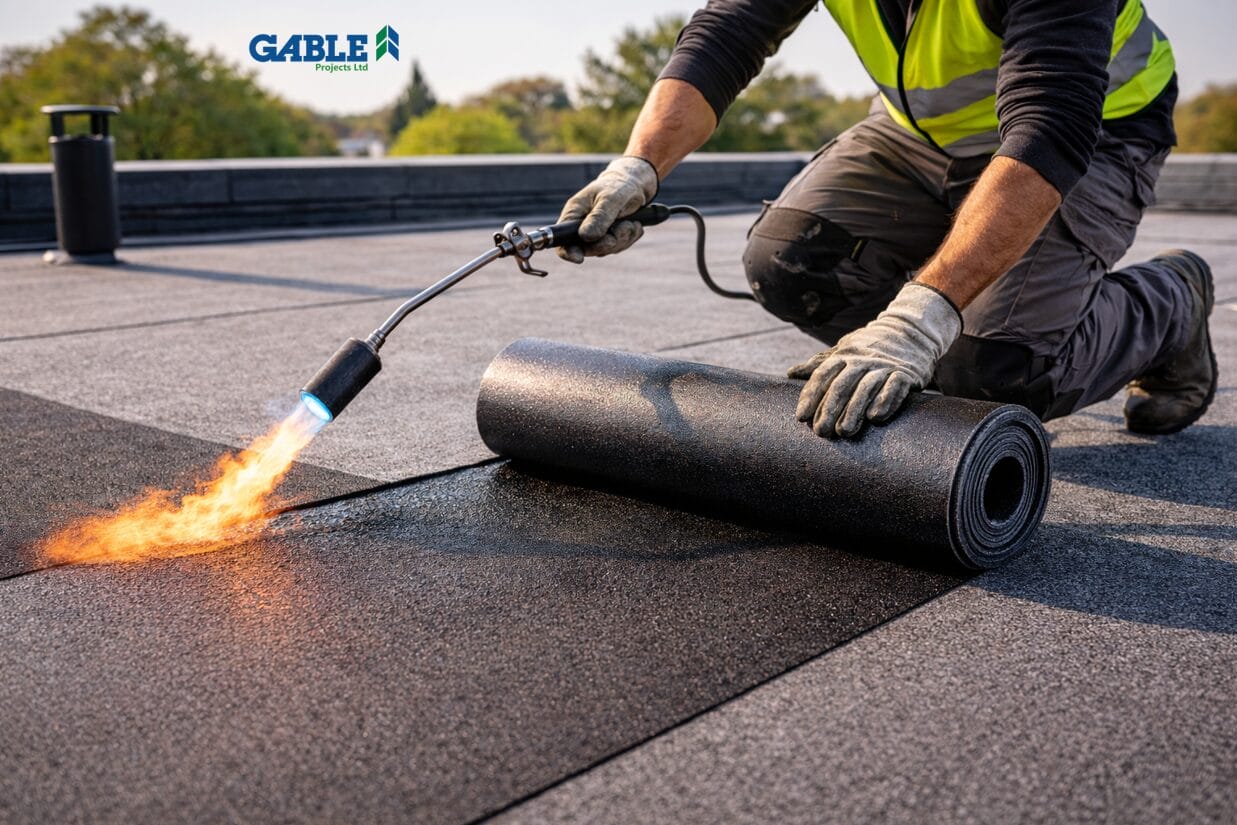
Flat roofs are common in commercial and residential buildings, but they come with unique safety challenges, especially when working with materials that traditionally require open flames.
Roofing work involving torches or heat-applied membranes can be hazardous if proper precautions aren’t taken. That’s where flame-free zones, alternative sealing methods, and fire watch protocols become essential tools for contractors and site or facility managers.
Understanding Flame-Free Zones
A flame-free zone is a designated area on a roof where open flames, torches, or other ignition sources are strictly prohibited. These zones are critical for preventing accidents and are usually determined based on the roof’s design, materials, and surrounding environment.
Typical flame-free zones include areas:
• Near combustible materials such as insulation boards, timber structures, or debris
• Around sensitive rooftop equipment like HVAC units, vents, and electrical conduits
• In densely built urban areas or residential complexes where fire risk is high
Identifying these zones before work begins ensures that roofing teams know where heat-based methods are unsafe. It also helps maintain compliance with local fire safety codes and insurance regulations.
Flame-Free Sealing Methods for Flat Roofs
When working in flame-free zones, contractors can still achieve durable, long-lasting roofing solutions without risking fire hazards. Here are some widely used flame-free sealing techniques:
1. Cold-Applied Adhesives
Cold-applied adhesives are bitumen- or polymer-based compounds that bond membranes without heat. They are ideal for sensitive areas where torch application is unsafe. These adhesives provide strong adhesion and flexibility while minimizing fire risks.
2. Self-Adhesive Membranes
Modern roofing membranes often come with peel-and-stick backing. These self-adhesive membranes are perfect for precise applications in small or difficult-to-access areas. They offer a quick, safe alternative to traditional torch-on methods.
3. Mechanical Fasteners
Using screws, plates, and clamps to secure roofing membranes is another flame-free method. Mechanical fasteners are often combined with adhesives for added durability, especially in areas exposed to high winds or heavy foot traffic.
4. Liquid-Applied Coatings
Liquid-applied coatings can seal seams, joints, and roof penetrations. Applied with brushes, rollers, or spray equipment, they cure at ambient temperature, eliminating the need for torches while offering excellent waterproofing performance.
By using these methods, roofing teams can maintain high-quality results while reducing the risk of rooftop fires.
The Importance of Fire Watches
Even with flame-free zones, some roofing tasks may still require the use of torches, such as torch-on bitumen membranes in non-restricted areas. In these cases, a fire watch is critical. A fire watch is a trained individual responsible for monitoring the site for sparks, embers, or signs of ignition during and after flame use.
Key responsibilities of a fire watch include:
• Continuously monitoring the work area while torches are in use
• Keeping fire extinguishers, hoses, or other suppression equipment readily available
• Maintaining a log of activities to ensure compliance with safety protocols
• Providing immediate response in the event of fire or smoke detection
Implementing a fire watch is not just a best practice, it is often a regulatory requirement, particularly in commercial construction and urban environments.
Best Practices for Roofing Safety
To ensure safe and compliant roofing operations, contractors should adopt the following best practices:
• Identify flame-free zones before starting work: Map out areas where open flames are prohibited.
• Use flame-free sealing methods: Opt for cold-applied adhesives, self-adhesive membranes, mechanical fasteners, or liquid coatings wherever possible.
• Implement fire watch protocols: Ensure trained personnel are present whenever torches are used.
• Keep firefighting equipment accessible: Fire extinguishers, hoses, and suppression tools should always be on-site.
• Train your team: All crew members should understand emergency response procedures and evacuation plans.
• Document safety measures: Keeping records can help with compliance, insurance claims, and audits.
Conclusion
Working on flat roofs requires a careful balance between efficiency and safety. By establishing flame-free zones, adopting alternative sealing methods, and enforcing vigilant fire watch protocols, contractors can significantly reduce the risk of rooftop fires. Investing in flame-free technologies and training not only safeguards your team but also strengthens your reputation as a safety-conscious professional in the construction and roofing industry.