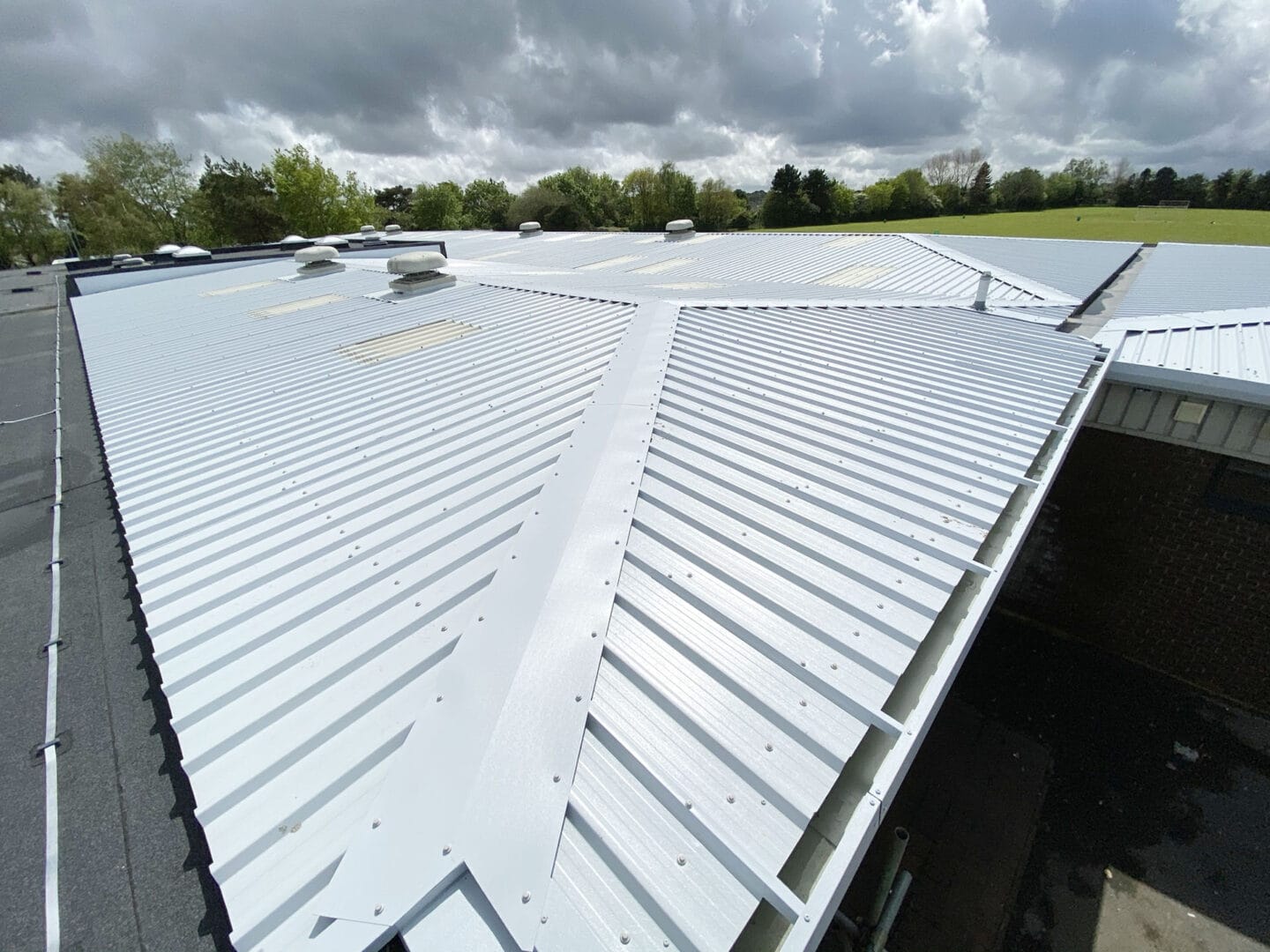
In the UK, the architectural landscape of commercial buildings is evolving rapidly to meet modern demands for durability, efficiency, and sustainability. One significant shift in this transformation involves replacing traditional and existing tiled roofs with metal sheet roofing. While tiled roofs have been and remain, in certain environments, a staple in British construction, they often fall short when applied to large-scale commercial structures. Here, we explore the key benefits of stripping a tiled roof and upgrading to metal sheet roofing for your commercial properties.
1. Improved Durability and Longevity
One of the most compelling advantages of metal sheet roofing is its exceptional durability. UK weather conditions can be harsh and unpredictable, with frequent rain, high winds, and even occasional snowfall. Tile roofs, though robust, are prone to cracking, shifting, or becoming dislodged under extreme conditions. In contrast, metal roofs, whether steel, aluminium or less commonly, zinc, offer long-term resilience. With a significantly increased lifespan, metal roofs outlast many traditional materials, reducing the frequency and cost of future repairs or replacements.
2. Reduced Maintenance Requirements
Commercial buildings often span large areas, and maintaining a tiled roof over such a wide surface can be time-consuming and expensive. Individual tiles may break or become displaced, requiring continual inspection and repair. Metal sheet roofing, however, consists of large, interlocking panels that offer a more secure and uniform coverage. This design dramatically lowers maintenance needs, allowing property owners to save on both labour and long-term upkeep.
3. Enhanced Energy Efficiency
Metal sheet roofs can be highly energy efficient, especially when coated with reflective finishes or paired with proper insulation. These reflective coatings help deflect solar heat, reducing the building’s cooling load during warmer months. In the UK’s variable climate, this thermal efficiency can lead to significant energy savings for commercial tenants and operators, lowering utility costs and reducing carbon footprints, an increasingly important factor given the UK’s push toward net-zero emissions.
4. Quicker Installation Time
Time is money, especially in the commercial sector. Stripping an old, tiled roof and replacing it with a new one is labour-intensive and can take several weeks depending on the building size. Metal sheet roofing, by contrast, can be installed much more quickly. The large panels cover more surface area per piece and can be fitted using faster, more efficient methods. This means reduced downtime for businesses and quicker project completion for developers.
5. Lightweight Structure and Less Stress on the Building
Tiled roofs are significantly heavier than metal sheet roofs. Over time, the weight of traditional tiles can place a considerable load on a building’s structure, especially in older commercial properties. Metal sheeting is much lighter, reducing structural stress and potentially allowing for simpler support frameworks. This weight reduction can also be beneficial when retrofitting older buildings, helping avoid the need for costly structural reinforcements, however you should always take the necessary steps to check and ensure the structural integrity of roof supports.
6. Design Flexibility and Modern Aesthetics
Metal sheet roofing has come a long way in terms of design options. It’s now available in a variety of profiles, colours, and finishes, allowing architects and property owners to match or modernise the appearance of commercial buildings. Whether seeking a sleek industrial look or a finish that mimics more traditional styles, metal sheeting offers the versatility to meet aesthetic and functional requirements.
7. Sustainability and Recycling Benefits
Finally, metal roofs are one of the most environmentally friendly roofing options available. Most metal roofing materials contain a high percentage of recycled content and are 100% recyclable at the end of their lifespan. Compared to concrete or clay tiles, which often end up in landfills, this makes metal roofing a more sustainable choice aligned with the UK’s environmental goals.
Conclusion
Replacing a tiled roof with metal sheet roofing on a commercial building in the UK presents a strategic investment. The benefits, ranging from improved durability and energy efficiency to faster installation and environmental sustainability make it a smart choice for forward-thinking property owners and developers. As commercial demands and climate responsibilities continue to evolve, metal sheet roofing stands out as a modern, resilient, and efficient solution for the future.