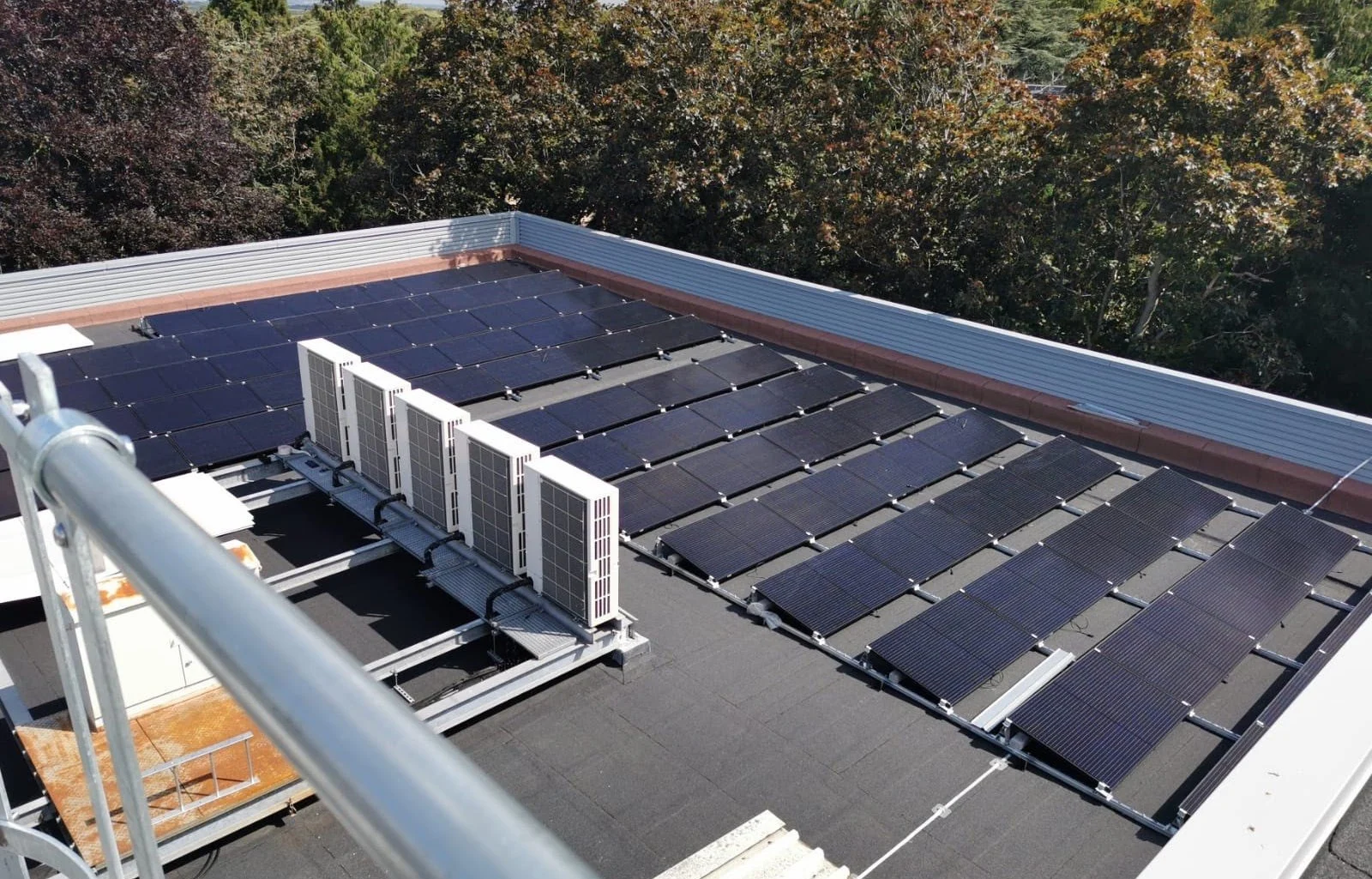
If you’re in the UK, considering solar when replacing your flat or pitched roof on a commercial property brings some seriously strong advantages, especially with rising energy prices and growing sustainability goals.
Here’s a specific breakdown on the benefits of installing solar on your commercial roof replacements:
1. Reduced Energy Costs
• Generate your own electricity during daylight hours, especially beneficial for businesses operating between 9–5 pm.
• Flat roofs are ideal for solar as they allow optimal panel orientation, allowing panels to be placed in best position to maximise solar gain.
• Reduces your dependence on the National Grid, shielding you from future energy price volatility.
2. Government Incentives & Support
• Smart Export Guarantee (SEG): UK government initiative that requires some electricity suppliers to pay small-scale generators for the renewable electricity they export to the grid. It ensures that businesses generating their own electricity through technologies like solar panels can earn money for the surplus energy.
• Capital Allowances: Businesses can claim 100% first-year capital allowance on solar investment through schemes like the Annual Investment Allowance (AIA).
• Grants and local support schemes may be available depending on your region or local council.
3. Cost Efficiency by Combining Roof Replacement & Solar
• Doing both at once:
o Avoids the extra cost and hassle of removing/reinstalling panels later. These would need to be stored and re-fitted after the roofing work has been completed.
o Ensures the new roof is built to support solar structurally and efficiently. The idea of solar sounds great but if the current roof is not able to take the burden of the additional weight.
o Can mean shared scaffolding and labour costs. Depending on the size of the commercial building the cost of scaffolding alone can run into the tens of thousands, negating a large amount of the saving.
4. Energy Resilience & Future-Proofing
• Paired with battery storage, solar can protect you from outages or peak-time tariffs (especially important for manufacturing, warehousing, or cold storage).
• Prepares your property for future regulations, as the UK moves toward net zero carbon targets. Some of which may become mandatory.
5. ESG & Sustainability Credentials
• Helps meet Environmental, Social and Governance (ESG) goals.
• Supports net zero targets and enhances your green business profile, which is increasingly important to customers, investors, and stakeholders.
• Could contribute toward BREEAM ratings, which is leading global standard for assessing, rating, and certifying the sustainability of buildings and helps in improving the environmental performance of buildings throughout their lifecycle, from design and construction to operation, along with other sustainability certifications.
6. Increased Property Value & Attractiveness
• Solar panels can:
o Improve Energy Performance Certificates (EPC) — a must for letting commercial properties and changing regulations over the minimum ratings. This may cause commercial to become unlettable in the future.
o Make the building more attractive to tenants/occupiers who want to cut their operational costs and carbon footprint, to meet their won targets.
7. Roof Protection & Longevity
• Solar panels can shield the flat roof from UV, weather, and thermal cycling, potentially extending the roof’s lifespan.
Conclusion
After attending a recent seminar organised by Insider Magazine, it was noted that in the event of the immediate installation of solar panels being held off, there is a demand within construction sector, on new and replacement roofs to pre-load the roof to ensure it has the capacity to house PV and the associated weight the system requires. This is a reverse of The Misalignment Dilemma but equally as important.
Combining solar with roof replacement on a UK commercial property is a savvy move that can bring financial savings, environmental benefits, and a strong ROI. With rising energy prices and pressures on companies to hit energy targets and decarbonise, it’s becoming less of a “nice-to-have” and more of a strategic investment.